Microsoft Equipt to offer $70/yr "Office Consumer Value Pack"

Microsoft
4 Comments

Just when we thought Microsoft could not possibly lose any more direction as a business software publisher they find a way, in form of Equipt:

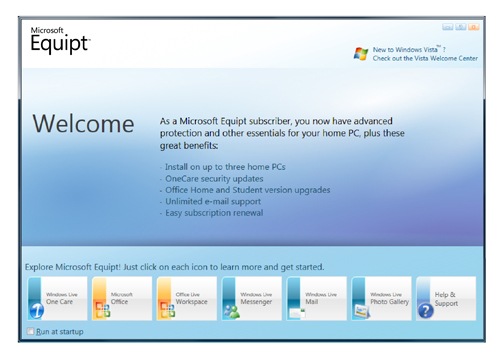
Initially code-named “Albany,” Microsoft Equipt offers consumers Microsoft Office Home and Student 2007, giving them the latest versions of Word, Excel, PowerPoint and OneNote for their personal and school projects; Windows Live OneCare, the all-in-one security and PC management service; Windows Live tools, such as Windows Live Mail, Windows Live Messenger and Windows Live Photo Gallery so they can connect and share with people they care about most; and Office Live Workspace, a new service from Microsoft that makes it easy to save documents to a dedicated online Workspace and share them with friends and classmates. Anytime a new version of Office or Windows Live OneCare is released, Microsoft Equipt customers will get the version upgrades as part of their subscriptions.

But is this just another distraction from the core Microsoft business, or is this a brilliant ploy to leapfrog the competition in the consumer space?

In short: Microsoft is trying to extend its desktop monopoly to include the Office and Service Subscription monopoly by bundling it’s Office Home, OneCare Antivirus and a bunch of freeware found on its web site. Why? The ploy to get OEMs to install a trial version of Office on brand new PCs backfired when customers realized they were tricked into using the new drug but didn’t quite want to pay for it! So they went back to the old releases.

Equipt2

This move does four great things for Microsoft:

  1. It reassures the retail channel that it can continue to be relevant in the Cloud Services world because the package will be distributed in a retail setting leading to more store visits and ability to get some direct retailer IT services traction (Geek Squad, FireDog, etc)
  2. It creates a proof of concept for Software-as-a-Service model for Microsoft, extending beyond the free ad sponsored software solutions that have by large been loss leaders for both Microsoft and Google.
  3. It creates a track record of demand from the customers in the area where regulators are less likely to be skeptical of Microsoft’s actions. While this kind of a “bundle offer” would lead to immediate lawsuits if it included things like Exchange and SharePoint (which require other purchases and more complex licensing), not too many people seem to be focused on the consumer retail space where Microsoft can try out its “bundling” effect and later claim consumer demand, not anticompetitive greed, as the main driver.
  4. It changes the licensing message from “Right to use” to “Install it on three PCs, we aren’t going to threaten you by calling you a pirate!”

All in all, good move Microsoft! I doubt anyone will notice what is really going on here.

Lucy’s Sail: Chapter 1: … And they set sail to the old world …

OwnWebNow
8 Comments

columbus_ship If he were around today, King George III would have written “Something of significance happened today” in his electronic diary. He probably wouldn’t have gone mad dealing with the new EU privacy laws which made it impossible for him to use the cheap software services from the new world. For today, Vlad Columbus set sail with La Nina, La Pinta y La Santa Maria back to the old world with ship loaded with spices, Exchange 2007, SharePoint 3.0, Offsite Backups, Virtual web and email hosting. With the looks of “consort fit for a king” at the prices even a cockney flower girl in Covent Garden could afford.

Ladies and gentlemen, welcome the world of Microsoft business class cloud services to Europe!

From a company with over twelve years of expertise providing services and data center solutions.

With massive redundancy across the continent, with data centers in United Kingdom, Netherlands and Germany!

At the same prices we charge for services delivered from United States!

With ten times the storage!

No, we didn’t wake up last year with a goal to destroy our partners businesses by competing with them ruthlessly for every single corner of the market with notoriously poor services, legacy of horrible Indian support, from a data centers that probably won’t be finished for years just in hope of keeping Google at bay but ending up just freezing our own market. (I did mention this was going to get dirty, right?)

No, we did it in careful cooperation with thousands of partners who for years loyally sent us their businesses and with the rise of Patriot Act simply could no longer use USA-based services. We did it with the feedback on what is needed, what would sell, what would make everyone a lot of money. We also did it when we built up the network of partners that needed this, so we could make it profitable and sustainable.

So what is coming to Europe?

Microsoft Exchange 2007.

Microsoft SharePoint v3.

OWN Offsite Backup Servers.

OWN Virtual Hosting (web, email, SQL).

But it’s going to be expensive, right?

No, it will be the same price as for the service in United States. $1/GB offsite backup, $10/Exchange Mailbox, $10 for virtual hosting.

But it’s going to be crippled down to 5 Mb mailboxes, right?

In United States we offer 1GB mailboxes by default. We use enterprise class storage and clustering technologies and that happens to cost. So with the bandwidth costs in UK, more expensive storage, etc you’d imagine to have a little less room on your Exchange box, but of course!

Nope – 10 GB mailboxes. No, that’s not a typo – that is a ten gigabyte Exchange mailbox for $10.

Since we learned a lot about Exchange 2007 since our initial launch of Exchange 2007 hosting we were able to go back to the drawing table with Western Digital and SuperMicro and design our European offering a little better and a lot more affordably.

But this is just some promotional launch, right?

You should know better than that from OWN, we don’t do fire sales. You should also know that we are aware of the “currency” problem – yes, we are proud to be an American company and take American dollars from your credit card – but that doesn’t mean that we’re ignorant of the realities of international commerce and what the exchange rate fluctuation can do to your profit margin.

Each service will come with a contract and a 20% exchange rate fluctuation, so if your currency devalues to the US Dollar by more than 20% we’ll adjust our pricing.

So you are going to fight with us for the end market, too?

Yes, our logo is blue, but thats about as far as we go with anticompetitiveness.

All OWN contracts come with a non-compete clauses – we actually turn over the account if your customer signs with us directly, we don’t move accounts from one provider to another without the original partners permission, we never solicit your customers directly and we don’t offer any benefits or pushy sales people incentives to remove you from the food chain. We actually like working with partners.

Can I get it if I’m an American or Canadian?

Absolutely – the prospect of $1/GB international storage seems like a good deal doesn’t it? We aren’t enforcing geographic restrictions, nor are we marking it up like crazy country to country – so just pick where you want your service to be provided from when you’re signing up.

Great, so we get to promote you?

Ever heard of ExchangeDefender? We take the managed services stuff seriously – the services management console based on Shockey Monkey will have full branding for all your management needs.

What about the community?

Part of our profits will be spent to promote the EU IT communities.

What have I forgotten…

Oh yes, that's really me. Yes, that big of an ass. Oh yeah, first, this never would have been possible without our partners who gave us constant guidance and business over the years, enough business that we could justify this expansion of all our services to include Europe. We’ve always provided our ExchangeDefender service with global redundance, and now the rest of our family is joining in.

I know this may compete with your way of thinking or what you imagine the future might be. It’s hard to think of going from designing infrastructure for thousands of dollars (or euros) into the world of thinking that the same infrastructure is going to be provided out of your sight for $10. However, if you look at where the application development is heading, at what the marketplace is dictating as the value (or lack of perceived value) in the on-site infrastructure. Who is to say which one is the right one? Nobody knows, but the point is that you can compete at that level too.

What’s more, you can focus on the more profitable areas of technology consulting, of customizing all these nameless and faceless applications into something that benefits the end business enough that they keep on bringing you back for more where you’re not just another computer switcher but someone with indepth knowledge of their app infrastructure.

I want to thank all our European partners for the business and loyalty over the years. This move is long overdue. However, it is here with far more than we do or offer in United States. We look to growing the new market with you, not against you. Really, where do you want to go today?

Tune in tomorrow to see what we’ve got in store for her majesty’s prisoners…

Words of Wisdom

Vladville
8 Comments

You might want to look the other way, this one gets messy.

If there are any words of wisdom I wish to impart on you, my dear audience – whether you’re an SPF, a business owner, a student, a stay at home mom/dad, a techie or someone who just got lost here – it would be this:

“Never fuck with resourceful assholes.”

004119_11 Arrogance is a funny thing, it encourages you to plow ahead without concern for consequences, without regard for the feedback of the people you are affecting and without care because it’s all about the money and whoever has the bigger pile wins. Which I am sure works great, until you piss off resourceful people that will work for next to nothing just for the satisfaction of kicking your ass.

Tune in over the next 10 days, I promise it will be fun to watch. Oh, and if you blog about any of it I’ve got a pile of shiny iPods just looking for a good home! It’s iPods and steak knifes.

How much e-trash do you eat?

OwnWebNow
7 Comments

Sitting around on a conference call at the moment, discussing the value of direct (intrusive, interrupt) emails for marketing and PR purposes. To me, the difference between the SPAM and the thousands of “newsletters” I receive each week is starting to disappear with each passing email because supposedly informative newsletters I signed up for “to keep in touch” are used for nothing more than to slam me with crap I need to buy (“Today, and if I call in the next 15 minutes…”)

Now, don’t get me wrong, I am not suggesting newsletters need to be free of advertising or that advertising shouldn’t be showcased prominently – something needs to pay for the quality content I get delivered conveniently into my Inbox. However, it is pretty obvious when the only reason the newsletter exists is for you to sell shit. That’s fine too, when it comes from some cupon site or deals site, but if I signed up for your organization and gave you permission to email me to give me the news about what you are up to please have some respect and throw in a little news around your ads and promotions?

I clear out my newsletter folder every Friday, I get on the average of 700 messages a week. I am constantly feeding it one professional newsletter organization after another because I have found it that even the most reputable of companies will keep on sending you news and promotions even after you’ve signed up. Most also tie directly to the email you use to make purchases or maintain login information, so there is no escaping those. So my pile of e-trash grows.

So what is OWN to do..

I’d like to know if you read newsletters. If you do, drop me an email (vlad@vladville.com) or contact form.

Statistically speaking, we know people don’t read our newsletters. Oh, there are people that open our newsletters but they are pretty much the same people that already subscribe to our two blogs and are information junkies, or they are like me – open it just long enough to delete it.

Why Windows 7 Doesn’t Have To Die (The Return of Microsoft)

Microsoft
3 Comments

Ever since 2003 TechEd we’ve been speculating on the time when Microsoft will be releasing a modern operating system to compete with the new lightweight offerings from the competition that are starting to pick up more steam. To see the details of the complaints and issues, check out this hit piece on Windows from NY Times, written with the anger you’ll only get on Vladville.

The situation is far simpler than both Microsoft and NY Times would have us believe though.

Microsoft is afraid of a complete system rewrite because every incremental step in evolution of Windows over the past few years has been met with severe resistance. First the 64bit move, which vendors were not ready for and did not have anything ready for. Then we had the security enhancements in both Vista and Windows Server. For Vista’s sake, it was just horribly implemented, everyone but maybe five people I know absolutely hate UAC to the extent that they have disabled it and shot the system back to the security level that even XP would cringe at. On the server side, Microsoft just doesn’t have the security reputation for people to trust it, and Forefront line of software is just never discussed as an option.

So, what is Microsoft to do? Sit back and roll out another dud?

Pretty much:

Last week, Bill Veghte, a Microsoft senior vice president, sent a letter to customers reassuring them there would be minimal changes to Windows’ essential code. “Our approach with Windows 7,” he wrote, “is to build off the same core architecture as Windows Vista so the investments you and our partners have made in Windows Vista will continue to pay off with Windows 7.”

This is why I am tuning into the Digital WPC to find out what they will say about the future of the platform that is crumbling. Microsoft, at least in PR terms, is taking the line of least resistance and trying to say that everything will be the same its always been (look how well that worked out for Vista after all, the sales are through the roof!) and it will be same ol’, same ol’ with just a few tweaks to sync up to the net.

I want to propose something else..

If the assumption is that the Microsoft monopoly on the Office and Desktop is strong enough to put another [explicit language string too long for the blog post] Vista version out, what about putting out a modern operating system out with the legacy compatibility running in a virtual machine?

It’s not going to happen, but after all, this is Microsoft, and it needs to do something big. If it intends to remain relevant that is.

Whose Microsoft is it anyway?

Microsoft
1 Comment

This is the difficult question that everyone will be tuning into Digital WPC to find out.

With Microsoft’s now legendary Chairman Bill Gates heading off into the sunset, two men stand at top of Microsoft with clearly different agendas.

First, we have CEO Steve Ballmer known for ruthless acquisition, competition and enhancing shareholder value and customer experience with every move. This is the guy that wanted to buy Yahoo because he was convinced that Microsoft can’t do it on its own.

On the other hand, there is the Chief Software Architect Ray Ozzie, sitting in a role that Bill Gates had newly revealed conflicts with the Steve Ballmer’s direction for Microsoft. So here is my short list of questions:

What proof is there that both Ballmer and Ozzie can coexist, or even work together, to innovate Microsoft past its monopoly-empowered dominance that seems to be crumbling with each passing day?

Which one will take a point to the partners that the software world as we know it now, and the services industry that exists to support it in its current state, will cease to exist?

Who will be the face of the Microsoft accountability to the partners and customers, in the climate in which Microsoft solutions are seen as too expensive, too unreliable, too Vista?

Who will step up into the role of a developer evangelist, to reinvigorate developer community into finding Microsoft’s technology as sexy and unencumbered by the Microsoft’s ever-present need to control everything and flood the system with “me-too” instead of open integration with market leaders?

Where will Microsoft enable me to make money as a partner? If you are pushing for services, will I receive a cut from the subscription fees you will charge your customers to access your cloud service and access my applications for free? Will you be sharing your ad revenues with me to entice me to write applications on your platform instead of the one powered by AWS, Google or Apple? On the services side, will you continue to push solutions direct to our customers (OneCare, Edge services, cloud services) or will you respect the partner boundary and give us the decision making power of making you a platform component instead of a total solution reseller?

These two men are stepping into big shoes and they have big questions to answer, particularly now when Microsoft finds itself far on the tail end of cloud services and online advertising, crumbling monopoly power over the desktop, customer dissatisfaction with Vista, customer confidence of 2003 – 2007 releases of servers and no upgrade intentions.

Microsoft has to convince both the marketplace, the developers and service partners that it is the future of computing and not Google, Apple, Linux and emerging cloud services. Day by day Microsoft loses its status as the best or perceived best solution starting with the desktop but going into mobility, communications, entertainment, services all while flooding the market with me-too products that fail to challenge the dominant solutions in terms of openness, quality, reliability and price (see: XPS, SilverLight, Microsoft Online)

Your move Microsoft. Give us your best sales pitch.

Mission: Distraction

Vladville
Comments Off on Mission: Distraction

Hey, everyone is entitled to be wrong…

Having a job “on the Internet” can be particularly difficult because the source of distractions far outweighs the sources of inspiration and information, even when you have the work ethic not to follow the trails to inefficiency. About a year ago I made fun of the social networking that dragged down the path of making every contact a personal friend. I stand by the notion that I know a lot of people but I know I truly have very few people I consider to be my friends. What I was wrong about, and what I think I’ve fixed over the year, is realizing that the social networking on the Internet is a way to be accounted for and connected to those first adopters and influencers that  seem to be in on all the new stuff that I may not know or have the resources (or interest) to explore on my own.

I also throttled down quite a bit on my social calendar, in favor of starting a family and spending more laptopless hours with my new wife. This was a hard decision to make at the time, being a workaholic, but in hindsight it was the right one because it pruned out a lot of distractions and set me back on my mission.

Perhaps the most giant mistake I had made, and the biggest source of distraction, has been participation in the nearly endless debates trying to defend or carry on conversations with people for whom I have less respect than the homeless thugs that ask me for change while I’m feeding the parking meter in front of my office. Somehow I never quite picked up on the lack of conversations that started with or involved some of the most successful people in this business. Chalk that one up to the social crack of interaction. Earlier today a few people asked me for comment about some threads and I hacked my way back into my Google junk account to take a look (in the hindsight it’s probably good I forgot that password) and I scrolled through the threads. Same people, same problems, same issues, not an inch of progress. The old Vlad would have replied with some smartass comment or an opinion, the new Vlad closed the window, went home, hung out with wife and son and still managed to ship some code and contracts out by the end of the day.

What is the mission?

The point is that the mission of your enterprise is what you define and how you define it. Every minute of the day you have a choice of sticking to that mission and seeing it through or letting doubt, uncertainty, insecurity get the best of you and send you in a further spiral of not getting your job done.

IT is not a gig for perfectionists, that is something that I took way too long to figure out. As often as things change, as rapidly as you have to respond to the market demand and technology going arcane before your very eyes, you cannot afford to let yourself be taken down the road of endless debate with the village idiot. You have to look forward, make sometimes difficult decisions, hope for the best and work hard to fix things when you’ve made a mistake.

This is something I’ve had written on my monitor since July of 2007, and over the next few days it will become apparent why. It’s just that sometimes it’s easier said than done.

Evolution: Move over MSP, it’s the age of DSPs

Vladville
2 Comments

Vista is a fiasco. Microsoft went from building software to building vapor clouds. Rampant speculation that Microsoft is doomed without leadership. The biggest spotlight is on a hyper-closed smartphone and online hangouts. And the front page of the Wall Street Journal says that consumer confidence has again hit an all time low. Who would have thunk it?

More and more people are starting to wake up from their self-deluded coma and raise their head out of sand to realize that just because you choose to ignore the economic realities of running a business, your ignorance alone doesn’t have the power to change what is actually going on: lack of innovation combined with a tough economic cycle, shrinking credit availability and consumer confidence.

What in the best of times made for the business partners of convenience is now setting up for a showdown of end user control. Dell and Microsoft and Apple and Comcast and (insert every company name here) are all blowing past their partners and looking to work directly with the customer. The service providers who once served as the agents for the above simply due to the enormous demand and complexity are now seen as competition and are becoming displaced.

It is giving rise to the whole new deathpool of MSPs that Chris Rue and I discussed last night: The Disaffected Service Provider. DSP if you will.

DSP is inheriting the same lack of ethics and planning that SPFs were popular for before the giant lawnmower of Microsoft Licensing enforcement knocked it out of the IT world and into the world of real estate and mortgage refinancing. DSP is also taking on the riffraff business building code of design: “I’m not in this to build a business or gain expertise of any kind, I just rationalize that I can make an OK paycheck by being a necessary evil for those too busy to read a manual or a trade journal.”

The opportunity in this market has never been greater: Microsoft monopoly on life support with obviously demotivated and directionless leadership, endless doubt and speculation over who will control the future of business applications and data storage (Amazon? Google? Microsoft? Salesforce? Dell?) and how we will use technology in life and in business is creating a wide open door of opportunity… now.

Yet, the pile of disaffected service providers seems to grow, some disinterested and some angered, that the world of technology keeps on evolving and that with it we evolve as well or just cease to be relevant (and thus unemployable).

The Fourth Year

As I head into the fourth year of this blog I look back at my Vladville mission over the last year and try to figure out what service I have done to my business, my business associates and partners, my fans and readers. Last year I posted a survey asking why you come here, what you are looking for, who you are, etc. I saw my duty with Vladville in 2007-2008 to cover the underlying change that we are seeing in the marketplace, the diminishing Microsoft influence, the difficult economic scenario and the departure from the one-dimensional process-driven business implementations of what used to work to what is likely to work in the future.

I think I did an OK job. The audience has more than doubled, the fanmail has gone through the roof and hate mail has nearly disappeared. I think I’ll just chalk that up to thinking that if you disagree with me you’re wrong and basically doomed 🙂

Going forward, as I return to my baby, I’m going to spend more time writing about what we’re doing in this brave new world of IT services and how we are doing on implementation of our new business plan. Should be fun, I hope you stick around.

As always, thank you for reading Vladville and thank you for all your money!

Why is everyone so interested in my pocket?

Microsoft
1 Comment

It seems like we can’t let a week go by without someone being interested in my pocket. What is even more surprising is that they all want it to be open. First the Android from Google promises the world to developers with operating system that takes Java software to the mobile world, then the iPhone from Apple makes a big splash with the ability to write applications once on the web and run them on the device without modification, now Nokia buying Symbian and claiming it will be open so it can set the future of the mobile free.

Why is everyone so concerned with the future of mobile, and why must it be so free and open?

Very few people are sincere in their hate for Microsoft, like Marc Benioff from Salesforce.com who explains that the major motivation behind these moves is to dethrone Microsoft from the leadership role they enjoy in business software.

There is a race to out-open, out-free, and out-bling the future of mobile telephony with the usual development restrictions just a few feet away from the shiny banner of false promises. The world of pay-for-play development tools, the world of application redistribution restrictions, the world of carrier objections and inevitable crippling of functionality we are so used to.

Follow the money…

Remember a few weeks back I wrote about how less than 7% of development is dedicated to Vista? Large software deployments are very difficult to manage (read: expensive) and when you make a decision on a platform you stick with it. This is why you still see Windows NT4 and Windows 2000 running some core services and LOBs in larger companies, they approved the purchase, got the LOB that was supported on the platform and the solution will likely not move until the building is imploded and building rebuilt.

Corporate IT managers feel much the same way about mobile computing. It used to be that only remote workers were road sales people, executives and an occasionally misfortunate new hire in the IT department who got stuck doing on-call as a condition of employment. Today, things are quite different – everyone from the restaurant seater to the hotel chain maids is linked, synced and managed through the mobile applications that everyone rightfully expects to only grow in utility and deployment base.

Everyone is concerned with writing applications on a system that will not be changed on a whim, support discontinued in X years, features changed or locked down when they no longer make money.

Thus, everyone is trying to win the developers who have had to put up with broken and often incomplete API, needed large support contracts to be able to interact with the device or software or just could not use their skills or manage their own application deployment.

What we are seeing is an open PR fight over who will be the openest of them all so they can assure the years of device and operating system distribution and licensing fees.

Which, ironically enough, has been the Microsoft business model all along.

We’ve never met, have we?

Awesome
2 Comments

From the mailbag:

“So is your blog just a collection of your innermost feelings you can’t say out loud in real life?”

🙂

Why yes, I’m generally shy and reserved in real life.