You can’t try to get organized

GTD, Shockey Monkey
1 Comment

My phone has been on fire since the last blog post. I wanted to address the biggest question we get about Shockey Monkey (and really all of our solutions) and what that question means to me based on the track record, statistics and everything else I happen to know from dealing with the same issue:

Can I try it out for free?

There are several variations of this question: Can I have the Pro for free to see if it’s right for me? Can I host it in my data center? Can I have access to the source code and will you ship a developer to my basement so we can custom tune it to…

While I never say no (because just about all of those are on the roadmap this year) I tend to forward those questions elsewhere because it tells me that you aren’t seriously committed to becoming more organized.

It’s quite simple, allow me to explain.

Yes, all marketers are liars

If Shockey Monkey cost you $500 or $5,000 or $500,000 you bet it would have to sell you on the fact that it would rapidly transform your business to the point that you wouldn’t be able to recognize it and you could spend all winter skiing, all summer boating, all fall golfing and maybe you’d have to cut your spring break short a week to file your taxes. Cake!

Then there is the reality, in which most of the large ERP deployments flop or at best fail to deliver on the promise.

Why? The human factor. Humans don’t like change. Even if you’re in charge of deploying it, you will find a way to do things outside of the system which will slowly errode it’s day-to-day usefulness and when the whole organization is not in it, it doesn’t work. Unless they are forced to, like with Microsoft Outlook. Or for compensation, like with the punchclock. Either way, there needs to be a level of commitment and a level of resolute force at hand in order to drive adoption.

There is one exception – if you make it simple.

The reason folks do stuff outside of the portals is because it’s easier. It’s easier to write stuff down, it’s easier to make a quick call, it’s easier to walk over and ask someone a quick question instead of sticking it into the system.

Unless the system makes it easier to do stuff and makes it far more convenient. It’s easier to go ask someone a quick question and it might even be nicer to get away from actual work – yet people do it with SMS and instant messaging all day long. In the business concept, this is simplicity driving adoption.

We have our tools embedded into Shockey Monkey and it’s done tremendous things for our hosted Exchange and SharePoint, our ExchangeDefender and all the other stuff. Does it mean that our partners can’t just resell stuff from someone else? Not at all, they can sell whatever they want. We just made it incredibly easy and tied it with the rest of their stuff. So the monkey stays free because it’s a win-win for everyone.

There is a point at which you have to decide whether you’re just going to try to simplify your approach and just make a decision to get organized and process oriented.. or if you’re going to keep on trying different things all the time and never really getting what you want out of them. My job isn’t to experiment, my job is to make it easy so people will use it.  I head a good idea, I try to use it. But until you make the decision to actually commit to a process, the price tag or the “unknown” don’t really matter at all.

Besides, when I talk to my successful partners you all tell me you’re busy. If that’s the case, aren’t you far more likely to just go with something that’s ready to go right away (www.shockeymonkey.com) instead of trying to think down 3 years worth of customization efforts?

Keep it simple.

Flipping The World of SMB Marketing

IT Business, IT Culture, SMB
Comments Off on Flipping The World of SMB Marketing

Disclosure: This is a massive pitch. Please don’t misunderstand though, it is not meant to sell you or convince you – it’s a direction that I’m going in and if you’d like to hop onboard with me, you’re quite welcome. Enjoy.

We have just come out of a massive VAR extinction level event. Somewhere between automation, consumerization and overall technology just getting remarkably better and easier to use a large segment of the “IT business” population either got jobs or found a place in other industries. It used to be easy to make money, even if you didn’t like to market, sell, promote, manage people or even if you were not that great with technology and keeping up your skills. The easy money is gone.

With the easy money gone, companies that want to grow rapidly are finding it harder and harder to find qualified partners in a crowded field and reaching that next new partner is both expensive and logistically complex – they don’t attend shows and they aren’t just going to buy stuff for the sake of small incremental revenue: It has to fit the strategy and it has to impact the core business significantly to get promoted, sold, deployed and delivered over time. Without the ability to address a massive performance annoyance (spam, viruses, downtime) or critical business component (backups, failover, continuity) the solution sale and resistance (and effectively the cost) are more prolonged.

I knew this was coming. It’s why I wrote Shockey Monkey. It’s why I gave it away for free. It’s why we currently enjoy a rapid increase in the number of resellers and the level of activity across those resellers. Not just by showing the blueprint but by executing it ourselves. And you ought to listen to the folks that are actually making money and copy them. Wanna know why? Because the alternative sucks.

Just about everything else hasn’t worked. “You mean to tell me that the VARs that failed at the game are NOT the best people to tell me how to run my business? But they sold their business for nearly 3 times their monthly reoccurring revenue a month before barely making their payroll! I should ignore that?”

Yes, that’s exactly what I’m saying.

The traditional “from the trenches” expert panel of successful MSPs/VARs/Cloud managers is arguably less valuable to you in terms of advice because their model is being challenged by consumerization of the industry. Why should you sit around and listen to a conversation about desktop PC expertise when the tablets are taking over?

Really successful IT Solution Providers are at a junction point: Minimize spending and consider a sale or invest in expansion/transformation to a more consumer-oriented technology business. Considering the premiums that the market is dictating on the MSP businesses that have been acquired so far, most of your sub-$10,000,000 shops are going to transform.

Of course, my sales figures support that thesis Smile What we are doing is not a coincidence or an experiment.

Where Shockey Monkey Fits In

When I launched Shockey Monkey I told everyone that it’s not a PSA. I still maintain that it’s an extension to a PSA model and it’s inherent design isn’t management of your business but the service delivery to your customer – portals, chat, remote access, invoicing and accounting, reporting – in the face of changing demand your customer service is more important to your business than the tech solutions.

Yes, you need a tool to manage the tech solutions. And I’ll give it to you for free.

You also need a system and partners – today we will be inviting many of them to the platform.

You see, the way software and hardware vendors currently market their solutions is by throwing messages out and hoping that they stick. When you walk by my booth at a trade show, I have a few seconds to get your attention. If you enter a drawing or a contest, it’s another opportunity. But it’s only an opportunity to pique your interest about what I can do for your business. I do not get to take you through the whole benefit of my solution. And quite frankly, for some solutions the business decision maker or sales guy or even the support manager may be the wrong person to talk to.

This is where Shockey Monkey, and advertising you will see in it, are fundamentally different. It’s not a game of impressions and hoping someone will click. It’s an annual campaign that can be updated daily. Shockey Monkey users will be working in the portal and seeing vendor messages – almost constantly – and have a clear idea of the value and benefits that are offered. This includes everyone from the lowest paid helpdesk admin to the highest-compensated partner who is only in there to see the quarterly sales figures.

This is a marketing approach that is both new and mutually beneficial for all of us. IT Solution Providers get a free portal experience that ties into virtually all the systems from the PSA (if you have one) to the accounting package to quoting package to the RMM and even your own web site. All brought to you by the vendors who want you to make them a part of your business. But do they get your business just because you clicked on their ad? In a way that we’ve implemented the marketing in Shockey Monkey, they win when you win – and it’s on them to show you how to grow and do so in an assisted, supported and illustrated way. We have a common goal here.

Over the next few blog posts I will go into details on how this will happen. Vendors, hardware and software, have very deep pockets but also very talented people and lots of insight into the industry. IT Solution Providers have the customer service, connections and willingness to do the implementation process.

It makes everyone more accountable. You can no longer overpromise, underdeliver and move on to the next sale – the dynamics of IT business have been flipped from large deals to smaller deals that are earned every month. In order for vendors to stay in partners toolbox they have to deliver every day of every month. In order for the IT Solution Providers not to be removed, they have to deliver far more value. Which means the cost of business is higher, margins are lower, and we’re racing to gain a larger market share.

Shockey Monkey is less of a tool and more of a platform to make this possible. Not only will we make those connections but we’ll turn them into a relationship that is connected at the service delivery.

The synergy of the two potentially turns every single one of us into IBM.

Lowest Common Denominator

GTD
Comments Off on Lowest Common Denominator

I had an interesting week at work last week. More about that later. Right now I wanted to offer a little bit of realistic take on some of the criticism in general.

Some stuff is only popular because it caters to the lowest common denominator.

Fair enough, but if it’s popular then it makes it the new norm.

Your opinion of the norm doesn’t really matter (in particular to the lowest common denominator folks) but you have a job to do and things to accomplish.

You look at the new landscape, new rules and play to win.

Everything else is just details. Would you rather be bitching and lose or give it your best shot?

Valentine’s Day At Work

Boss, Humor
7 Comments

This is meant to be funny. If you don’t have a sense of humor don’t read this.

Today is one of my favorite days – nobody is on a diet, it’s cool for guys to buy a ton of roses and you can eat your body weight in chocolate. It’s like an adult Halloween. And yes, we’ll celebrate anything at ExchangeDefender that involves cupcakes.

v3

Valentines Day is a challenge for an employer to pull off because.. and how do I put this delicately.. some men in your company will turn into little bitches because they didn’t get flowers.

Am I attractive enough to even the manliest of system administrators into acting like little girls? Of course! No Question!! I’m sure that’s why most people work here to begin with. But that’s not the point.

To perfectly balance the need for candy and pretty things with the overall inappropriateness of employer sponsored valentines presents you have to reconcile what men and women expect from this very special day.

v2What women think

Awe. It’s Valentine’s Day! I hope I fall (even more deeply) in love today.

I want candy. I want flowers.

I wonder if I can still fit in that red dress I bought last year. Black shoes with the red dress or red shoes with a dark red dress?

I can’t wait.

Today is going to be a great day!


v1What men think

Valentines?

Oh shit, that’s today?

That’s alright. I need gas. I’ll get something while I’m there.

Let me make some reservations.. What do you mean you don’t have any availability tonight????

Hmmm… I wonder if Taco Bell does those gameday 12-packs of tacos in pink?

I know what boys like.. I know what guys want…

I’ve been giving flowers to ladies in the office for years..

Every year guys would ask (not jokingly) where their flowers were. I always had the same response: Seriously? You want me to buy you flowers?

Indeed they did. For guys, Valentines day is all about recycling. So here is the recipe for Valentines Day 2012.

Recycling

Every year I have lunch with my lovely wife and discuss my Modern Family at work Smile

Last year one of my (now former) employees finally came out and said what I was too naïve to understand: “That guy is an asshole! Now I have to go and buy stuff.”

It turns out that there is no workplace envy for what the ladies get.. it’s a matter of socialism and them not getting what someone else got.. so they could regift it to their significant others!

Simple enough, but how do you reconcile the single folks with the ones in relationships? How do you balance the right gift for ladies vs. guys with ladies vs. single guys?

Simple.

With ladies you’re pretty much limited by whatever American Express tells you.

With guys you have a wildcard option. Here is what I did:

Ghirardelli’s chocolate box

1 red rose

1 shot of Captain Morgan

1 small bottle of Martini Asti

2 small bags of M&Ms

If they have a special someone, this is pretty much a quiet evening and a romantic movie slam dunk. If they don’t, following up sparkling wine with a shot of rum will put you in just as good of a mood.

Cover all bases.

v4Ok, but what if they are gay?

So this gets a little bit awkward if you’re a guy giving Valentines Day presents to another guy.

They are still guys. Same recipe works. You just gotta go a little bit further.

Cover their floor with rose petals and Valentines Day M&M’s leading to their desk.

But what if you’re wrong about them being gay? 

Doesn’t really matter, after the other people in the office see this display, they’ll think they are gay anyhow.

Upside to this part is that they’ll think you’re gay too.

This is awesome for two reasons:

1) Guys won’t complain about what they didn’t get because it will out them.

2) NOBODY will want to hang out in your office anymore or complain that you didn’t take them out for drinks. EVER.

There you have it – how to use Valentines Day to boost employee morale and keep them from bugging you the other 364 days of the year.

Happy Valentines Day!

What would you like to know?

IT Business
2 Comments

The vlad@vladville.com mailbox has been flooding for weeks with questions about Shockey Monkey & ExchangeDefender – good news, it means you guys are busy! I figure I’d open up the suggestion box a little and offer answers to any questions that are really on your mind about the MSP industry or IT industry in general, running an IT / software business or anything along those general terms.

No State of The Union Address

So many of you have asked for a “Big in 2012” post or podcast and I haven’t fulfilled that request because this year you get to write it. The economy is recovering, people are spending an incredible amount of money on the cloud services, reducing infrastructure and reducing technical complexity.

Exactly as predicted over the past few years.

So in my humble opinion, there is no “big” new thing that is coming. Things like mobility, cloud, working remotely, security and government compliance and the like have been discussed, documented and dare I say it, proven in the marketplace as overwhelming successful business models. So there really isn’t a magic new technology that you will be leveraging this year that you didn’t have access to last year.

This year is less about the vendors and tools and more about you and the implementation of those tools to keep on pushing your model forward.

This is the year for you to work in your business. I know, I know, there is great shame associated with working and being deeply involved in your business, talking with your clients, leading your teams and perfecting your business – but this is really the year to do it. It’s what will separate you from owning a long term business or being a defunct organization with it’s leader in search of employment.

So do the smart thing. Focus. Then do the work.

In the meantime, if you’ve got questions, I’ve got plenty of time and opinions that I’ll be sharing with you here and you can always look at www.LooksCloudy.com for the more elaborate discussion, podcasts, webinars and industry big picture stuff from the folks that make them.

Of note: Many of you have asked about Vlad’s MegaMSP which is a project I’ve discussed with only a handful of people. News spreads fast when you ask people not to share it I guess – I’ll discuss that next month after the ExchangeDefender Essentials is rolled out.

Lifecycle of Ineffectiveness

IT Culture
Comments Off on Lifecycle of Ineffectiveness

Before you read this: This isn’t Vartruth or Channel Watchdog, I’m not trying to single anyone out or make it a personal hit. That said, you will certainly see the similarities between these descriptions and people/companies you have met. Your opinion (or consideration of mine) is not what is relevant – however, looking at these patterns and avoiding them when you encounter them in your own career/company is critical. If you don’t have the time to read the whole thing scroll down to the last paragraph.

Lack of attention span isn’t entrepreneurship

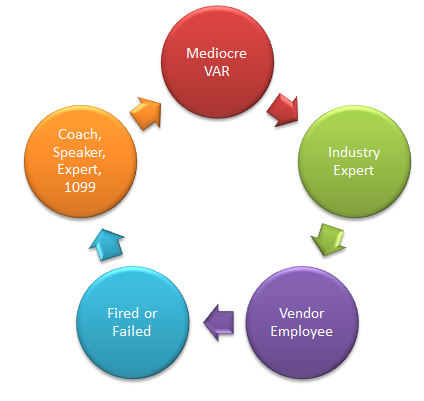
Every now and then you will meet folks who are in webinars / panels / conferences for seemingly no overwhelming success or reason – maybe they just sent in a positive survey on the day that the marketing manager organized a webinar and their sales engineer called out with flu. This is how the Mediocre VAR becomes an Industry Expert that is paraded around the circuit because there is nothing companies love more than uncompensated third party endorsement. Unfortunately in business you can’t fake your way into profitability so eventually these folks end up in significant vendor roles because they “understand our clients business” (dear vendor friends: if they did, they wouldn’t be asking you for a job). Except they don’t, and in real companies you have to show results or you end up back uninstalling spyware for a living.

vartard

So if you can’t play, coach. Or advise. Or provide input. Eventually they learn something in the death spiral process and they go back to being some sort of a solution provider.

Lesson here is that if you’re charismatic enough you can avoid real work but that can only get you so far. Real entrepreneurs are obsessed about their businesses and maximizing their profitability, they don’t sit around looking at the grass on the other side of the industry.

Leveraging attention deficit

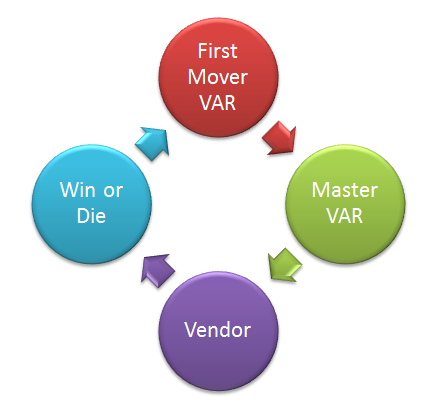
Bad decision making and lack of work ethic isn’t limited to individuals, companies can fail in the same way. Fortunately for those of you with paychecks, it takes a real business model (or a venture capital fund) to keep people on payroll and put the whole house on Black or Red. But it happens.

VAR realizes it has something on it’s hands and it’s easier to grow the fastest possible way – find similar beasts and teach them how to make a killing. Inventor becomes the vendor and then one of the two things happens: most die when the business model flops or they win out by making acquisitions or being acquired.

vendortard

Lesson here is that there are many business plans out there and only a few will win at them while the majority will lose.

What do they have in common?

I have spent a lot of time talking to a lot of entrepreneurs. Big and small.

One difference I’ve been able to pick out between the successful ones and the failures is in the way they treat their business: Are they focused on their business or something else?

If you meet a technology employee (regardless of rank) at a technology event (regardless of the event) and you’re both in the same field and you DON’T talk to them about technology – run.

Technology business isn’t a community college, you aren’t trying to find yourself and figure out what you want to be when you grow up – technology business is a business and it’s a business of making money now. And if you aren’t good at it then why are you talking to me?

It’s really that simple. Unless you’re extremely attractive, single and willing to do things so inappropriate I can’t even write them on this blog. Though if your decision making is so poor that you’ve found me attractive you’ve failed somewhere along the way.

Phoenix Firebird is just a myth

There is this myth that amazing things can come out of ashes. I’ve never seen a bird ignite itself and it’s nest just to immediately spring back to life more beautiful than ever.

Yet I see businesses, employees and entrepreneurs fail every single day.

There is no substitute for hard work. You’re no better and no smarter than the next guy. Want to see people that think they are smarter than the rest – go to a prison or a flea market and look behind the bars. There are no shortcuts.

Hard work doesn’t get glorified because it’s not attractive. In casual discussions more people are envious of successful folks and many would rather talk trash than be willing to join them with the same level of work ethic and dedication. Not everyone that becomes a success is a crook. Here is what it boils down to:

If you suck, you will fail. It doesn’t matter if you’re a VAR, Vendor or employee.

If you’re good and you work really, really hard… you still may fail.

Hopping from one sinking ship to another has only one certain trajectory: to the bottom. The difference between the success and failure in the long term is staying motivated and continuing to work on being the best. If you’re lucky enough, it pays off in the end. It’s still a heck of a lot better than drowning in the ocean of failure.

Persevere.. because winners don’t blame others for where they are at.

Are we not competitive or not stupid enough to be slaves?

IT Business
6 Comments

The answer to this question is relative to where you live and what your socially acceptable norms are. For example, the French look at Americans as people who are so fast paced and frenzied that never get to enjoy the finer things in life or have a 3 hour dinner – in fact most of Europe gets better benefits and far longer vacations than we do. And as fast paced and career oriented as we are, most people in Japan that are working over 300 days a year would think we are just lazy. And the factory workers in China don’t think shit because they have to put together an iPad every few seconds during their 18 hour shift.

Here is an interesting article that I hope you take a moment to read:

How U.S. lost out on iPhone Work

Now it depends which bias you read the article with. If you’re an extreme Republican, you’re probably thinking that Corning lost the glass cutting deal because of too many government regulations and insufficient labor force that is getting too many entitlements. If you’re an extreme Democrat, you’re probably going to point out that the reason China won was because government subsidized the plant, the housing and more. What our leaders (who let’s face it, are pretty much the same behind closed doors while pandering to different extremes in the public) would point out is that we’re not flexible enough and need more education to modernize our workforce, more (insert empty government promise) to entice private sector to compete more and create more jobs. So much for the fantasy.

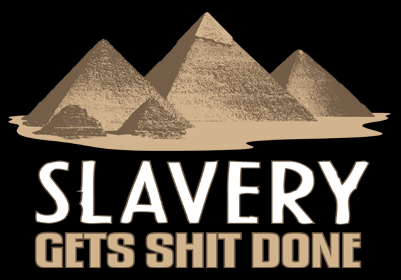
The reality of the situation is that China won because of access to the slave labor force. They are not more flexible because of less government employment and regulations, they are more flexible because of a totalitarian government that calls all the shots. They are not smarter or more educated than us when it comes to manufacturing, but they are willing to work 18 hour shifts and live at work.

The whole article could have been summed in four words:

slavery

As long as I’ve been following the American politics, it’s always been someone elses fault that there are fewer jobs. In the late 90’s and early 2000’s, illegal immigration was taking away good American jobs like janitorial duties at Walmart, landscaping and unskilled construction. These days it’s the fault of corporations that are outsourcing the jobs overseas.

It’s always someone elses fault. And damnit, someone else needs to fix it.

The reality, however, is that we have it so good here and we’re unable to sacrifice or roll backwards in the “quality of life” department. When we are buying products and services we want the cheapest possible one – we’re ultimate capitalists. Yet when it comes to work, we’re the ultimate socialists – hours and benefits even if we don’t deserve them.

The way these conflicting stances are resolved is through shifting the labor and production to the area where costs are minimized and profits are maximized. Those that take the risk stand a chance of higher than average returns. Everyone tries to participate. For example, #OccupyWallStreet largely objected to the salaries and bonuses of the financial industry that bankrupted the US economy and was perfectly permitted to do so under the policies of President Clinton & Bush. Yet nobody points to the lack of responsibility of the general public that bought properties it could not afford, signed off on forged and misleading financial statements and only did so in order to flip the house and get money for nothing. Politicians blame state financial woes on overpaid high school teachers while the college graduates blame corporations that won’t hire an English or Architectural History majors with no experience to high paying jobs.

Nobody wants to do the hard work.

Internships and long hours are beneath us.

Steve Jobs is the devil for outsourcing and not bringing the jobs to America but the slave factories can’t crank out enough iPad’s to meet the demand. 

Self Selective Slavery

I blogged a while ago about the lifecycle of employee disenchantment. When an employee accepts a job they are excited – they are getting paid! But after the first few paychecks are spent, they are underpaid. God forbid they are a few minutes late to work and someone points it out – now they are both underpaid, unappreciated and harassed!

Most people immediately go to living beyond their means which ultimately always assures lack of happiness with their social status.

This is where it’s again someone elses fault – likely their bosses. Employees both know more about their job than their bosses (“I’m the one actually doing this after all, you don’t know everything I have to put up with!”) but also deserve better pay. To the degree that it may be accurate, it’s also true that the employees have no idea what their bosses, management or company owners have to put up with.

So they look for a new, better job. It’s always about looking up and ahead because everything else is instantaneously beneath us.

That is why those jobs will never come back to USA.

It’s not because of Obama. It’s not because of the corporations. It’s not because of the Wall Street. It’s not because of the regulations – and remember that those regulations are in place because of the abuses corporations got away with for decades that made us a great and overly entitled nation.

For example, general pro-business opinion is that regulations are bad. They limit corporations. True, but everyone wonders where the regulators are when the financial system implodes due to fraud, when the planes are slammed into highrises and when the oil rigs explode and destroy the environment. It’s of course always someone elses fault that the rules are not followed – but it’s the rules fault that we can’t compete.

No. It’s because of you. It’s because you want an iPad but don’t want to work an 18 hour shift at the minimum wage. It’s because you want government services but don’t want to pay the taxes that fund them. It’s because you want an acre of land but don’t want to pay $20 to have it mowed or do it yourself. After all, you’re better than that.

As long as we’re expecting to get out more than we put in the world of leverage will rule.

The Middle of ExchangeDefender

Own Web Now (ie, Shockey Monkey, ExchangeDefender, CloudBlock, etc) is a small technology company. We actually make stuff (we’re not just repackaging other peoples stuff) and some of our products have very long development cycles.

Truth is, there are very few high paying jobs here and they are almost exclusively reserved for people that are working on eliminating the low-end disposable jobs. Just because you’re necessary doesn’t mean that you’re important – so it’s on to you to become more important.

This is something that majority of people understand and accept as a norm. Majority of job applicants do not – which I think only serves as a qualifier for either their unemployment or looking for a job. Prospects with no employment history or entry level skills expect mid-level compensation and the responsibilities of an advanced engineer role. They are not willing to earn it off the clock and expect on-job training. They want clearly defined hours and no responsibility but they want the salary. They don’t want the pressure of timelines, SLA or due dates but they want the “flex schedule” and executive benefits.

As the CEO (entrepreneur) I look at every dollar spent as an investment and every dollar earned as a return. Over time, I look to maximize my returns – so I’m only willing to overpay for the personnel that does more work than they are paid to do. Over the long employment cycle we all benefit.

But what about the people at the bottom who choose not to invest, not to evolve and not to compromise?

That is why the middle class is dying.

Now to make this self serving.

At Shockey Monkey we look at the death of the middle class as a model for the eventual death of the middleware.

The solutions that were once too expensive, too cumbersome and too specialized were priced accordingly because nobody had a way to mass produce them, create alternate revenue streams or benefit from a consumer that was flexible on the training and high end customization.

Shockey Monkey is often unfairly pinned up against similar solutions because that’s the easiest point of reference. But those solutions were written for a single industry and over time became so specialized that it’s made them lack the flexibility to serve others.

When I look at Shockey Monkey I don’t see a budget ConnectWise, I see a process oriented system that can be used by lawyers, service shops, retail, architects, etc. My potential client base is not the dying technology middleman trying to optimize the response time between LPI noticing the problem and monkey being dispatched to fix it. My potential client base is everyone that corresponds with their clients via email, uses web site for marketing, needs a computerized way of tracking interoffice communication and hours worked, that needs to track clients and bill them for goods and services.

The era of unbalanced compensation due to location is over – and it’s nobodys fault other than our own. We reward competition and winners.. so long as that is the case, nobody will be willing to bail us out unless we are willing to do it ourselves.

P.S. Some people feel that the service sector is immune to this. I remember walking through Mirage in Las Vegas a few years ago and seeing folks gambling with a virtual blackjack machine that was basically a 42” screen displaying little more than a massive cleavage shot. Less than 10 feet away from a real life blackjack dealer. Most of the human interaction jobs (ie, service) will be replaced by the self service attendants – you already see it in the self-checkout lines. What if you wanted to go to the bank and interacted with a virtual banker working in China for $1/hour? Would you do it? Judging by the outrage that Bank of America faced when they tried to charge folks a few bucks for the privilege of a check card, you can’t fault them for cutting costs in other ways. 

Shockey Monkey’s open letter to the IT community

Shockey Monkey
3 Comments

Hello community, Vlad here. I wanted to take a moment to openly write about some of the questions that I have received in private that I feel should be a matter of public knowledge. Things are going great, we’re enabling more of you to do more with your day and we’re working on some great features that you keep on suggesting.

We got some great and insightful coverage from MSP Mentor and SMB Nation last week and I encourage you to check it out for additional perspective.

As for mine, you can go through years of blog posts on the Shockey Monkey subject, or IT Business for that matter to figure out what I think. But this isn’t about me, this is about you – all of you: our users, our partners, our vendors, our competitors and generally curious technology employees trying to kill some time.

Here are some of your questions with as candid (as in “get me in trouble”) answers as I can provide.

Why would you even do this?

It’s better that I say what’s on my mind and deal with the consequences… than have my partners, vendors, sponsors, users or competitors get some rumored “oh my god, you know what Vlad is doing..” stuff that just puts strain on stuff. I can count the number of people I don’t like in this community on one hand – and believe me, they know it. As for the rest, I love you, let’s kill some drama.

What is the biggest criticism Shockey Monkey gets?

Shockey Monkey has, does and forever will be seen as Vlad’s side project.

This is kind of annoying considering that Shockey Monkey has been available since 2006 in various alpha, beta and commercial stages. Not sure what more I can do to say that we’re serious about it but I can tell you that we’re making (lots of) money with it so the opinion overall doesn’t bother me a lot. Software development is not like Subway, one sandwich artist can’t just go back and add extra lettuce or cheese on your sandwich, for every change we need to deal with review, documentation, marketing and involve multiple people in the process so big features will take a while to get. However, since 2010 we’ve been rolling out significant updates to the monkey on a monthly basis and at this point thousands of people use it every way.

It will always be an evolving process as we continue to build Shockey Monkey further into the IT business and use it to replace more and more components that we currently (over)pay for.

Can Shockey Monkey replace what I’m currently using to manage my business?

This is apparently the second most popular question with the presales support. The answer is obviously yes.

You can absolutely replace your existing solution with Shockey Monkey.

Now that assumes that you are willing to live with the sacrifices and compromises. Which of course you’d only know if you tried the software and embraced it completely. Which of course should be dead easy to do because it’s completely and absolutely free of charge.

But it’s free because there is a catch, I’ll have to pay for stuff eventually?

It’s free and it’s going to stay free.

Shockey Monkey users resell the heck out of our cloud services – ExchangeDefender, ExchangeDefender Essentials, Exchange 2010 + SharePoint Hosting, Exchange 2010 Essentials, Offsite Backups, Web & Email Hosting, Blackberry, etc. Not because they are forced to – but because we make it dead simple and easy to do so – and we’ve even opened up sponsorships for Shockey Monkey so other vendors and providers can also make it easy to get tools you can make money off of.

True story: A few years ago Arnie and I were sitting around at some HTG event and we talked about working together on a global cloud services push. “You know Arnie, I already have that in place.” He seemed very excited about tying the two systems together – that’s why you have such a kickass ConnectWise integration with all the ExchangeDefender services – with billing data and agreements available in ConnectWise YEARS before they made it possible through their API. You don’t have to push people down under the guillotine to make them sell your software, you just have to make it easy. This is the core value of Shockey Monkey and why it’s going to remain free.

I make more money with Shockey Monkey being free and being exposed to more people than I can ever make by selling it or by turning it into a display advertising model (see next section).

I am not sure so sure if I want advertisements in my portal.

I understand and I appreciate the concern. However, these aren’t your typical display ads where you’re going to click on the wrong thing and have to scramble to turn your speakers down. We’ve only extended a limited number of invitations (I haven’t even sent all of them out) to people that we feel fit well strategically into the Shockey Monkey business model.

If you don’t want ads, it’s only $29/month and $9/month for any additional staff you have in your company. If it’s the sight of an ad that bothers you, that’s an easy problem to solve.

However, consider the power that these sponsors will have with the platform. Not only will they be able to get their message in front of you but they will be able to position it when you’re having an issue. Say you’re dealing with a support request about an infected machine – wouldn’t that be a good time to know about a product you can use to fix the issue? How about your sales opportunity – selling a new server, what if there was a tool (QuoteWerks) that would make it easier for you to get the right pricing right away and push it directly into Shockey Monkey. Dealing with lost data – well Intronis will show up on the side with the info you would have otherwise ignored or saved for later viewing.

We as software vendors have an annoying habbit of always being there when you’re in a middle of something but never there when you need us – this is a complaint I have been getting since I started this business – well, Shockey Monkey changes that. Sponsors are not just embedded into the solution from the display standpoint, they are there from the solution standpoint as well.

For example, all of the sponsors get space and time not just on Shockey Monkey portal but also on LooksCloudy.com, the site I have dedicated to educating the channel. We can guide people along and deliver exponential amount of value to you and your staff – without ever having you leave your desk.

So you’re making money by pushing us to Pro?

This is another common misconception, folks are constantly trying to figure out how we’re going to make money like we’re some Silicon Valley startup – even though I’ve been very clear that majority of our revenues comes from our product and service sales.

Just to clear the air, I’ll explain the four revenue streams for Shockey Monkey:

Advertising / Sponsorships – Revenues from third parties that want their solutions featured in Shockey Monkey and LooksCloudy.com

Pro Subcriptions – Revenues from Shockey Monkey subscribers that want SSL certificates with their own domain name, advanced technical support and no advertising in their portal.

IP Licensing – Revenues from third parties that want a business management, helpdesk and customer relationship platform embedded in their existing solution.

ExchangeDefender – Revenues from our products and services sold through the portals.

There is no gateway drug inside Shockey Monkey, there is no hidden toll, limits on the number of users or administrators or your usage. It’s out there, it’s free and thank you for selling our software J

How is the relationship with ConnectWise, Autotask and Shockey Monkey?

This is the drama that some folks want us to play a part of and I’m sorry to disappoint but things are going great on that front. I can’t comment on who has chosen to sponsor Shockey Monkey but I can hint that you’ll see some of these relationships taken to the next level very soon.

There is no tension or problems and we’re committed to making a deeper integration with both platforms. There are just some things that they do better than us and then there are things that we will just never do because they don’t fit our MO.

But you know what’s interesting? We’re bigger than both of them. How is that possible? Well, drama focused MSPs and channel experts only look at the 10,000 or so companies or MSPs and don’t consider all of the other companies out there in the VAR chain that provide technology and support services (hint: it’s an obscenely large market, much bigger than the little MSP universe). By bringing those folks into the fold we make a transition to Autotask that much simpler – so the referrals will always outpace folks that may want to switch from Autotask to Shockey Monkey for example.

But secretly, they must hate you.

Listen, I’ve been to both headquarters. Neither one had a Vlad voodoo doll. My foot doesn’t suddenly hurt for no apparent reason every day at 11AM. I’ve never had my car spray painted nor has my house been TP’d.

The problem that we all have is that we’re aiming our solutions at a very limited number of companies and it’s natural to see us as competitors. However, it takes a lot of effort to sell the service and presale/marketing/support for something that may not pan out is ridiculously expensive and requires an investment on the side of the clients themselves.

With Shockey Monkey, we remove price as an objection. Here you go, use it and see how it fits. It’s clear to see not only why they wouldn’t hate me but why they’d pay for me to be their best friend and make sure those referrals float up to them instead of a SalesForce or elsewhere.

I noticed that ExchangeDefender is required. But we have Postini and..

ExchangeDefender is required for inbound mail functionality (email-to-ticket) and for advanced outbound mail stuff (mailing lists, marketing, etc). This will get more and more prominent as we add some cool new features to ExchangeDefender in 2012 J

Now, our API is open and another email provider can choose to write an API to replicate the email-to-ticket functionality in their product. As a matter of fact, ExchangeDefender has a free email-to-ticket gateway to Autotask.

I would love to have you resell ExchangeDefender compared to anything else, if we’re being honest, but the restriction isn’t in place to lock others out – others just aren’t interested. Don’t blame me J

We would like to host Shockey Monkey in our data center.

I know. We have Shockey Monkey running on an appliance and are going to be offering a HaaS and a VSaaS model later this year. Basically, you’ll be able to put Shockey Monkey on your network.

Right now, everyone is hosted and we have users on our databases in UK, Australia and United States. From the regulatory standpoint, you’re good. And once we make Shockey Monkey appliances and virtual servers available we’ll hit you up first. Folks that use Shockey Monkey most actively get the first dibs and we go down the list from there. So if you’re serious about using Shockey Monkey and want it in your own network, you better start using it now or it’s going to be a while before it gets down to you.

What is next?

Sponsorships officially kick in Q2, so April 1st. By that time we’ll know who our strategic partners will be and which solutions we’ll have to develop on our own and which solutions we will develop deeper and deeper integrations with to make them nearly seamless.

Beyond that, ExchangeDefender as a company needs to take a more active role in the cloud service marketing and deployment on behalf of our partners – we’re being pushed to offer billing, support and management services. Our most successful partners are slammed with work and they are letting opportunities slip – stuff that we will be able to deliver on their behalf. In order for this to happen we need friendly customer service staff that faces actual users, we need an RMM platform that can be used by our techs to provision the service, we need a more sophisticated training and service oriented process and so on. Expect to see all of those in Shockey Monkey in 2012.

Trojan Monkey no glasses

Strategy-wise, like I said, Shockey Monkey will first firm up the few holes we have left as a technology tool and then expand the verticals a little and make Shockey Monkey an all purpose business operating system that helps you manage customer, vendor and partner relationships as well as human resources and overall social functionality that is a given. Big part of it is backwards integration with your email, mobility and service.

So there you have it. No drama. No catches. No hidden trojan monkeys – we’re giving you this for free and hope you like us enough to resell and use our services. If you need more than what we offer for free, we got you there as well with the Pro. If you need sales funnels and have issues with silos of chaos, I know a guy. If you need a quoting tool or a backup tool or an ERP tool, I got you there as well.

ABP. A Always. B Be. P Pimping. Who loves you?

The Difference Is In The Effort

Boss
4 Comments

Every year I do something stupid that doesn’t involve sitting in an Aeron chair.

I run a Disney Goofy Run – Half marathon (13.1 miles) on Saturday followed by a full marathon (26.2 miles) on Sunday. Well over 40 miles when you consider the distance to the start line, losing your car in the Disney parking lot, etc.

v1

Now, I wouldn’t really call it running. I barely averaged 5mph.

I’m also fat. At least according to the mirror, scale, BMI and other stuff biased by physics and gravity.

Long story short, I’m not winning many of these things. There aren’t many Kenyans out there worrying if they’ll have to outrun me.

Oh, and I friggin love McDonalds. Cluckin’ Surf’n’Turf (that’s a Big Mac, Fish Filet, Chicken Sandwich):

v2

So do I set myself up for such an obvious failure?

It’s not for the humbling aspects – of which there are many.

It’s because I have this personality flaw – I’m impatient and I don’t like to lose.

Turns out there aren’t many self help books out there for this problem. Mostly because it’s something you’re supposed to be slapped out of when you’re very young and you learn how to deal with a loss and move on. I apparently didn’t go to school that day.

So as I’ve grown up, built a business, started a family, assumed responsibilities and so on.. this personality problem started getting worse and started consuming more of my time. Suddenly I had to worry about kids about employees about business partners and competitors and as much fun as it may seem being successful, it’s not exactly easy or flawless.

You fail a lot.

I haven’t yet figured out how not to fail. Or how not to be stupid – if you have an answer to that (aside from “Don’t try.”) let me know.

What I have learned how to do is deal with the losing and just moving on to the next one.

At some point in my life I realized that I’m just incredibly lucky to keep on getting another shot to do something every single day.

Running marathons helps me strive to fight another day.

When you’re fat, out of shape, IT person.. any core physical activity is a miracle. Learning how to push yourself to the next bush, next mile marker, next water station, next race eventually gets you to the finish line. It’s a process of selling yourself on the fact that “Yeah, things may suck right now but you can do this.”

If you can’t have that much faith in yourself then what’s the point of getting out of bed?

The difference between success and failure is motivation. Yeah, you’re going to fail at times – that’s a given. All you have to do is brush off the dirt, get back up and work at it some more. Yeah, you’ll get knocked down again. But once you’re no longer afraid of getting knocked down – good things will seemingly come your way.

Why I wrote this…

I know a lot of you are struggling out there and it always seems other people have it figured out.

I assure you they don’t.

Don’t confuse luck with perseverance, arrogance with confidence.

Every day you wake up you have a choice of either feeling sorry for yourself and your problems or doing something about it and being happy you can do so.

Some of you hate your jobs. Some of you hate your businesses. Some of you can’t find a job – while others are struggling to fill open positions. Everyone has something they don’t like – don’t stress over the situation, focus on working towards a solution. In a really motivationally pessimistic sense, at least working on a solution will take your mind off your problems temporarily Smile

The difference between winning or losing is less with the external perception of how you’re seen, it’s more about what you’re pushing yourself towards.

Know when to quit. Just never quit on yourself.

2012: The year of core competencies

SMB
Comments Off on 2012: The year of core competencies

January is the month in which I’m obligated to offer my opinion on the coming year and what we will see. For the past few years I’ve had a relatively consistent opinion that cloud will continue to drive growth and displace the more traditional technology providers as they both have less to manage and customers spend less on technology that needs high end management (instead buying consumer devices). I’ve been fairly accurate in that assessment.

This year we will see something different.

This has been brewing for some time.

The major industry trend is the bet on vendor consolidation. While I agree, I don’t believe this will be a major driving force in the world of IT Solution Providers.

I think the major play this year will be the IT Solution Provider consolidation. Lot’s of people are looking to either exit or cash out on what they have built because posting remarkable growth numbers gets more difficult with each passing year once the business matures.

The marketplace is already saturated with events, coaches, experts, speakers, advisors and various groups that do not have an actual tangible product.

So with more people looking to exit the ranks of IT Solution Providers and become mentors to those solution providers… who will be left to actually deliver these solutions to end users?

In my opinion, business owners and managers will start to reverse the trend of outsourcing and will start doing majority of their technology sourcing themselves.

The pressure vendors feel to post ever increasing numbers will fuel acquisitions but also further competition with their partners.

Regardless of which way the economy goes, the spending on technology is going to continue because we’re only going to be using more technology.

What all this really means is that you’ll have to work a lot harder for the dollar but thankfully: your costs will go down.

Now here is the beauty in all this: Everyone is aware of it. So if you have a business model and plan that’s a few years down the road, you’re going to focus on further development of your core competencies and more sales/marketing activity. The distractions over “next big thing” or “paradigm change” or “blue oceans” will quiet down as people look at their cards and go all in.

Looking forward to showing you what we’ve got on deck for 2012. If you haven’t already done so, go sign up for Shockey Monkey at http://www.ShockeyMonkey.com – yes, it’s free.