
Squirrel

GTD
3 Comments

squirrel-300x287

One of the more memorable lines from the Steve Jobs biography is “I’m as proud of what we don’t do as I am of what we do.” I don’t think this is as apparent to those of you that don’t design software for a living so allow me to offer my perspective and how the dreaded “squirrel” affects pretty much all white collar workers. We all get distracted. But only some of us are capable of filtering and managing them.

Today, I will teach you this superpower.

Harvard Business Review recently showcased a study that indicates it takes 25% longer for a multitasker to get the job done. This is perfectly logical – when you dedicate all your attention and focus on the problem or task you can solve it faster than if you’re interrupted by other things. In the workplace this comes down to phone calls, text messages, instant messages, chat, Facebook posts, Twitter posts, LinkedIn posts.. everything except this blog.

To be clear, those are distractions you cannot manage. Unless you want to paint a huge banner that says “I am an asshole” and send your incoming voicemail/email/etc a note saying something along the lines of “My time is more important than yours. To minimize distractions I only check voicemail and email twice a day. I’ll get back to you later, trust me, it’s not an emergency.” While this is not an effective way of dealing with people, it is an effective way of getting rid of those pesky customers and their distractions.. I wouldn’t recommend it.

Managing Distractions

Managing distractions is the same as managing your agenda. I’ve written tons of posts about my Louis Vuitton notebook and how crucial it is to my day-to-day management.

I plan things years in advance. I manage them one year at a time. I get them done one day at a time, one task at a time. Every day I have things that I absolutely have to do or the company will explode (think corporate life/death events like payroll, taxes).

I also make a list of things I’d like to do.

This is key.

It’s easy to get lost in the corporate optimism, entrepreneurial smoke and all the brilliant ideas. It’s even easier to dream big! But you have to come to terms with the fact that you only have 24 hours in a day. That you have finite time, finite resources, finite cash, finite opportunity and possibility to get things done. So you manage.

Mind mapping is a great tool to use if you’re not great at drawing and connecting the dots. Just start with something that needs to be done.

Now break it down – what are the absolute top goals and what are the peripheral “nice to have” things.

Now break down the absolute top goals.

You get the idea. It looks like a Christmas tree after a while and while you’d really like to do everything you focus on the stuff you can do and do it well.

What is unrealistic?

The reason I write things down is because it gives a certain level of finality to an idea.

I star the page once I flip it over if I need to go over it.

Then when I have the time and am sitting in my office recliner shopping for cars on eBay (and it so happens to be a Tuesday afternoon).. I grab my notebook and go through the things I haven’t done.

Maybe it’s just me – but having it written down gets it off my mind. I don’t spend the rest of the day thinking about it.

It’s also a good way to categorize your poisons. I constantly do stuff that I shouldn’t do. It’s so bad that I’ve had to give up certain things at work like a person getting over cocaine – forum discussions. I used to waste monumental amounts of time arguing with unemployed people about the future of the Internet. It did nothing for my business or their unemployment, it just killed time and bandwidth. I couldn’t control it so I deleted the email address and asked my staff and friends not to forward me stuff. While I’m sure I missed out on some stuff, I was able to focus on the work and what was important.

Think about all the crap you do at work that you know you shouldn’t – Post all day on Facebook. Debate politics and religion. Sell drugs. Plan vacations. Check your retirement portfolio. Shop for a 1967 Ford Mustang. If you aren’t actively acknowledging that these issues are impacting your performance, you won’t be able to deal with them.

squirrel

So manage your tasks. But manage your distractions too. Pretty soon you won’t be distracted by squirrels. They will be distracted by you and you’ll go to dinner with them.

Freestyle Friday is a fan suggested topic, if there is something you’d like to read my take on please email it to vlad@vladville.com.

Angry Birds: The Microsoft Partner Edition

Microsoft
5 Comments

I’ve been in this business for roughly 15 years. Throughout that time I have been a Microsoft Partner (various levels), Microsoft Most Valuable Professional, Microsoft Certified Systems Engineer (various levels and specialties) and overall based a large chunk of my business on the Microsoft platform. I have many friends around the world that work at Microsoft and I’m also a shareholder. In short, I’m familiar with their business model.

Some of you seem to be new to this so I’m going to help you out.

Over a decade ago Microsoft was an arrogant company that was prosecuted around the world for the criminal abuse of their monopoly. Thankfully they had enough attorneys and money to wiggle out of many steep penalties and restrictions but in a nutshell Microsoft thought it was well within their right not just to demand their software be installed on the new PCs, but that no competing software be installed. It undercut it’s competitors on the commercial side, gave software away for free to squeeze others out and launched many misleading and false campaigns (Google FUD) in order to discourage people stuck in their monopoly from even considering everyone elses software. Thanks to the global prosecution at the time, Microsoft couldn’t do the ultimate Hailstorm hat trick: force the Internet into Microsoft’s proprietary formats, protocols and authentication standards. So the Hailstorm died and Microsoft is a better company as a result of it, right?

Well. Sort of. Sort of the exact opposite. The exact same people are still managing the company.

Microsoft, for as long as I’ve been following them, takes on it’s competition in the most infantile way as possible.  They don’t do this out of lack of respect or maturity, they still own nearly 90% of the market and majority of the browsers, game consoles, office software (the list goes on). They view every bit of innovation as a threat to their immense monopoly on business computing and rightfully so.

Now, if this is the way they have behaved for years, do you think they have learned something valuable over their insistence of eliminating any potential third parties from their ecosystem? Or do you think they act like a little kid that got beaten on the playground and is trying to come back years later seeking revenge?

Microsoft 4.0: We’re all in… and there is no room for you.

When Microsoft launched BPOS, many of the partners took great offense to being nearly completely cut out of the pie. You can play in the Microsoft cloud, but you only get 6%.

Then Microsoft cut the cost of those services. Woops, so much for making money with Microsoft’s cloud.

But it get’s better – some of you were delusional enough to go on with the illusion that you may one day be able to bill the customers.

Folks… this is why you need to go to Microsoft Worldwide Partner Conference (or at least watch it on the web) if you want to hear the direction of the Microsoft business straight from the horses mouth. In this case, Steve Ballmer characterized the importance of Microsoft Partners concerns about the cloud as eloquently as he usually does “And I’m sure I will be hearing from you this week about the comissions, billing, account control, blah blah blah”

Dig to find the least effective liar

I am not necessarily the CEO of a company because I am the most skilled manager or the most skilled developer or the most amazing leader.

I am the CEO because I can speak for 2 hours and say absolutely nothing.

It pisses my staff to no end. They get called on every mistake or statement they make. I speak for 2 hours, promise stuff (that I later find out doesn’t exist) and have people apologize to me when they can’t find it. It’s a superpower, OK?

You get your feet put into the fire enough times and you learn how to avoid it.

CEO’s, COO’s, CFO’s and other CxO officials are phenomenal liars. At some point in the past they were honest – and man, people HATE getting bad news. So to find out what is really going on, you need to dig deep. Find that binary sales idiot that is just repeating whatever they are fed by the upper management and there you finally get some clarity about what is truly going on.

Wired has had spectacular coverage of recent Microsoft missteps.. First about how Microsoft is blatantly violating it’s own licensing agreements to help former managers that ultimately sell the businesses back to Microsoft – if you look back at the history of Microsoft, they took a lot of flack for giving away Internet Explorer for free. So a former executive branches out, violates Microsoft licensing to gain VDS popularity on the iPad until Microsoft get’s to publish it’s own Office for the iPad. That’s not anticompetitive, that’s downright genius.

Wired followed up the post with more angry partners (please read the whole blog post here):

I was recently at a conference for technology solution providers, put on by an industry association. There I was sitting at a roundtable near the front. To my left and right were executives of managed service providers (MSPs), internet service providers (ISPs) and others, but the real action was directly across the table, frothing at the mouth. It wasn’t a rabid dog, it wasn’t a sports fanatic describing a huge loss — it was a Microsoft sales rep.

After listening to the backlash from the executives, the rep finally reached his boiling point, when the question was asked, “When are we going to be able to start billing our clients directly for Office 365?” His eyes glared back at us, his face turned red in anger, and with a firm voice, he blurted, “never, it will never happen.” Emphasis on the never was hard to mistake.

Any questions about where partners exist in the Microsoft cloud?

We have a saying in Texas.. Fool me once.. shame on me.. Fool me 8 million times..

{ Note to self… Vlad, come back to this part of the blog post and find better wording for “complete morons”.. something like “cloud specialized Microsoft partners”. }

Still, shame on you.

But we can make money in integration…

Shame on you.

But we don’t really like to bill anyhow, or the liability, or the support..

Right, because your clients are going to love you so much as their advisor when the stuff blows up as it does nearly every quarter? Shame on you.

But the money is not really in the licensing, it’s in the support..

Shame on you.

I really don’t know any more insulting words that I can share with you than those that Microsoft is apparently shamelessly issuing from Ballmer all the way to regional sales guys.

The shame really is on you – because Microsoft should not be blamed for any of this, not one bit. They are just trying to provide the best product at the best possible price and they are quite clear that they do not want you in it.

Any illusions you may have towards any future you have in the Microsoft cloud is your own fault, not that of Microsoft. Microsoft is responsible to it’s shareholders, not to you. And whatever amazing value you think you bring to the equation – well, it’s just facilitating your death faster. Because whereever you think you have an opportunity in the Microsoft ecosystem, you are dealing with a Microsoft client that they want to control – like Apple does – from the way they do business, sell you a mouse, phone, songs – everything your clients digital paws touch.

That’s it. End of story.

For my American fans.. Much of our disenfranchised population believes that we are slowly sliding down as a society and an industrial power because we don’t make anything anymore. We just outsource and import. This is the same thing. If you are making a solution, the most recognizable part of that solution better be you. Everything else should come secondary.

Or you can just pick better partners.

I work with Microsoft. I do so because they have the best software. But when I sell my products and solutions, Microsoft isn’t even in the top 10 reasons why they ought to buy my stuff. If you cannot differentiate yourself enough it’s a good indication that you will eventually be displaced by your partners. So pick your friends better and plan your business to be something more than an easily replicated service.

Results Are NOT Typical

IT Business
2 Comments

Have you ever been up late at night and turned on the TV just to break up the silence a bit? There they are, newfound millionaires who bought houses for no money down, made it big at car or government auctions and even got free money through government grants. And if you call right now, they are going to share the secret with you straight from their $5 plastic lawn chair special. Nothing screams millionaire like sweatpants and no-name polo shirt.

I mean, you can’t argue with the numbers. Especially when their riches are smudged with a drying highlighter at the bottom of the cheap copier paper.

investinit

I’m about to share an equally earth shattering secret with you. That secret is that there are really no big secrets when it comes to building an IT business and if there were these ridiculously profitable business models that somehow nobody else has figured out.. trust me.. no businessman with more than 2 brain cells would share those tips with you. They would be an idiot to do so.

Vlad’s IT VAR Gold Mine

I recently bought 4 acres of land in downtown Dallas on the edge of Trinity River to build a data center and while digging out the foundation we found a huge deposit of gold! Now, I’m already too rich and instead of hiring $5 day laborers I’m going to give you the chance to make billions – it’s just going to cost you $1,000 so I can train you how to dig properly. Well, I won’t be the one doing it, but I will have special CEO golddigger sessions in which you can learn how to buy your own property full of gold. Those are $10K though.

Not interested? It’s probably because you’re a loser. Call me when you become serious about becoming rich.

Now most people are intelligent enough to know that the above is outright fraud.. but some folks skipped school the day they were handing out IQ points and are probably doing the math right now.. “Well, it’s only $1,000.. Even if I dig out 1oz of gold…”

Aaassssssssssss.

Advice as a service.

I am going to break protocol here and give you some advice for $10,000. But it’s worth at least $100,000.

Well, because I like you, it’s gonna be $10,000 but only if you promise to read it now. Ok, $5,000 but you have to vote for me. Tell you what, since you’re a fan of Vladville, it’s gonna be $1,000. You know what, I like your smile. It’s free but you have to share this post on Facebook. OK?

The hindsight of successful business owners is that they should have invested more money into the business back when they weren’t making a lot of money.

Every single person (that is trying to sell you some advice) will advise you to spend money.

Oh yeah?

It’s like the newspaper business. Gotta spend money to make money. Ok, well if the ads work so great wouldn’t they sell them like crack – first hit is always free. Oh, it’s not? “Wait, you want how much???”

If you want to make more money you need to buy an RMM. No, a PSA. No, you need a BDR. No, you need to get at least 100 seats of ExchangeDefender. Any guess what a marketing business sales guy will tell you you need to spend your tight budget on?

So the secret – you should ONLY spend money on getting more business. Everything else should come free unless you can mark it up selling it to someone else.

Yes, looking back I probably should have changed just about everything about my business in every way. But guess what, I don’t operate a web design business in 1997. So my ability to offer my 1997 self is as good as advice some of you feel like you should take from people that have not operated your business in years.

You were so awesome at being an MSP that you aren’t one today. Please teach me how to be just like you! I want to be an MSP millionaire just so I can try selling other MSPs my brilliance instead of sitting at home stacking cash.

You can be a Go Giver in your community. But when you want to be a Go Giver in business and the guy on the other side is asking you for a check – you’re a Go Sucker. And if you get sold, you only got yourself to blame. Because nobody knows what is best for your business more than you do. And the number one rule in business ownership is:

Will this make me money? If not, pass.

If you can’t quantify the benefit of something, and have a historical pattern of your capability to do it, do you really want to try juggling knifes with stacks of your businesses cash?

Stress Relief for IT Staff

Boss
2 Comments

I don’t think that anyone working outside of IT can ever understand the amount of stress your average technology employee deals with. Some roles – such as working in support or network operations can at times make you feel like you’re being paid just to be abused. To a certain extent, that’s exactly why there is a premium – people don’t get angry at machines, they get angry and take it out on other people.

This is particularly bad in small business, where people are too cheap to buy what they need and then get mad at you when it fails to meet the speed or reliability they wanted but wouldn’t pay for. It’s your job to make it work and bring it back up or they’ll just take their business elsewhere – because not only are you incompetent and overpriced, you’re also easily replaceable.

The stress in IT is the same as the stress with virtually any other job. It’s just compounded by the realistic expectation that while you do the said job you also perform daily fire drills, do jobs of 3 other people, sacrifice sleep and personal fitness, backup and document your entire role and stay on top of the industry that changes everything about it daily. GO!

Dealing With Stress at ExchangeDefender

First I’m going to explain some of the stressful situations at Own Web Now but if you’re looking for funny stuff, scroll down.

2008-2010: These were rough years both personally and professionally for me both because I was dealing with crap on 3 different fronts. Newborn meant no sleep. When I could potentially sleep I was on the road apologizing for one issue after another as we struggled to get ExchangeDefender to where our partners needed it to be. Ultimately, this was the end of the “SBSer” era, and the amount of pressure and demand to switch from an enterprise-ish business to a consumer-ish business was putting all kinds of strain on the business in terms of juggling objectives.

What was particularly disheartening was that we were profitable and were growing the business far faster than we could support it – which meant we hired everyone we could and ended up with some pretty toxic people. Nothing like going to work with people you don’t like dealing with stuff you don’t want to and constantly being put under pressure to deal with it all.

Dealing with it: Even though the business was growing incredibly and generating obscene amounts of profit, I had to keep my team together. Every single day we would go out to lunch – no questions asked – all on the house. Drinks, booze, whatever it takes not to kill each other. Now academics and doctors will tell you that this is the worst possible way to deal with stress but it helped on several fronts:

#1 When you’re pressed for time, you have to work with the team you’ve got not the team you want. Nothing kills productivity like training new employees.

#2 When you get people together, no matter how much they hate each other and what is going on, there is a bonding process that eventually takes care of itself.

#3 When things aren’t fun, everything pisses you off. The walls, the paint, the smell, the temperature. Getting out of the office and being able to reset and go back in for another 3-4 hours got us through it.

2010 and beyond: After what is affectionately known as the “dark ages” around here things got much better. We got a much bigger office, more light, less walls and have some really great people working on things. But every day isn’t exactly paradise – we still have a punching bag in the office along with enough places you can crash if you want to. We are smack in the heart of downtown Orlando where everything is nearby – and there are few things that bars and ice cream can’t fix. For everything else there is Five Guys.

Vlad Stress

I honestly believe that I’d be a much happier person if I were drunk all the time. Every time I have a rough day and have a drink at lunch or after work I beat myself up for not doing it in the morning. Mouthwash <check>. Shot of whiskey <check>. I could be the Jack Sparrow of email. Unfortunately, I don’t have the discipline to be an alcoholic. Sad smile

Writing it down – I’ve written extensively about my LV notebook, I carry it around with me everywhere. I doodle UI designs, write down project descriptions, reminders, tasks. Every week gets fresh two pages of important tasks and every day has it’s own important things to do. So when I come to work, I know there is a truckload of stuff I have to get done or there are going to be issues. Whatever is pissing me off and causing me stress is secondary to what I have to deal with in order to move the company forward. My first job as the CEO is to make sure the company moves forward, everything else comes after that. Writing it down allows me to deal with it later, if I have to deal with it at all.

Walk away from a fight – Stressful situations tend to suck you in and I’ve learned that whatever my first instinct response happens to be tends to be correct roughly half the time. Which means that dealing with a stressful situation while I’m stressed out is making it worse half the time. Which then leads others to think that it’s something else that’s wrecking my mood and not the billionth time they’ve failed me in the exact same way. Stuff happens, I’ll fix it, just give me a second.

Drink, eat, go to the bathroom – Did you ever get pissed off at something completely random and couldn’t even explain why it was an issue? Me too. Maybe I’m just tired because the kid woke me up last night? In reality, it’s that I haven’t had anything to eat, I woke up early and have been pounding Diet Coke all morning long. Whenever I’m upset at something that doesn’t make sense I try to run through my biological checklist: “Why are you being a bitch? Thirsty? Hungry?”

Making it portable – Through the years I’ve done a lot to make my life less stressful. I have delegated a lot of my stress inducing responsibilities – from home to work. Now I know you’re probably thinking “Yes, it must be nice to be King Vlad, I can’t delegate my job or I’d be out of one!” but you’d be surprised how helpful people are when you tell them you’re having a problem.. “Listen, I suck at this, can we trade some stuff?” – Folks are understanding, it may not work at McDonalds but it works in smallbiz and in IT. This doesn’t mean I get to wake up whenever I feel like it, go to the beach and phone it in – but it does mean that of the 24 hours I have in a day not everything is ultra urgent and meant to be done as soon as possible. This step is probably the most difficult one because it takes a lot of discipline, lot of planning and organization – because all the goodwill is out the door the first time you drop the ball.

Fun Stuff

DISCLAIMER: WE DON’T DO ANY OF THESE AT WORK TO OUR PARTNERS. THOUGH THERE ARE TIMES WHEN I WISH WE DID.

#1 As soon as you pick up the phone with an angry customer on the other side tell them there is maintenance being done on the SIP server.

#2 Play salsa or merengue music in the background and turn up the volume when they are speaking. Apologize that you can’t help them and ask them to turn it down.

#3 Pretend you’re an Indian and keep on arguing with the client about their name and physical location.

#4 If the call queue goes up, start transfering them to the conference bridge. Then hop into the conference and try to get them to help one another.

#5 When working with tickets, ask for more information. Then change the users password. When they call you, tell them you can’t help them if they can’t verify their password.

#6 If the client is particularly angry tell them you’re getting a manager and put them on the hold. Take a short bathroom break. Answer the phone again, pretending to be the person you like THE LEAST at work. Here you can just be rude and tell them to take it up with the CEO… or just promise them stuff that are ridiculous but likely. Then when they are even angrier, the next person up in the food chain has to deal with it.

#7 If there is a known issue at the moment AND YOU KNOW ITS YOUR FAULT, ask them to reboot their computer or server. Claim it’s a company policy and you can’t go to step #2 until you confirm it’s not the PC – but it has to be done while you’re on the phone, doesn’t matter that you already did it (I had this one served to me by AT&T and it made me angry enough to punch the phone through a desk)

#8 If something IS your fault but you don’t want to admit it, make them do some quick troubleshooting crap that will go nowhere. Then fix the issue, ask them to check again. When they confirm it’s fixed, break it again. Tell them you did nothing to fix it or break it. Repeat this process a few times until you’ve got them believing that it’s an issue on their end, not yours.

#9 If they call in with an urgent issue that is really critical and needs to be handled immediately, ask them if it’s OK to put them on hold while you research their issue. Only pretend to put them on hold – and then act like you’re ordering dinner for the entire office or trying to price a vacation.

#10 Bonus for the road folk – Now some of you are reading this and thinking… I’m a road show monkey, what can I do? Go to your competitors table and ask for a tshirt. Take a whole stack of their business cards. Put their shirt on and go around the trade show trying to sell the product to complete random strangers. When they refuse (obviously) dismiss them in as vulgar of a way as you can get away with, without getting punched, and just hand them the business card you stole and tell them to call you when they get serious about their business.

In closing..

Remember that you get to call yourself a professional because you’re getting paid to do a job. Your personal problems with that job, it’s employees, customers, stakeholders and so on are just that.. your personal problems. Man up and find a way to deal with it, even if the only way you can cope with it is daydreaming about how to mess with people that cause your problems.

Or start drinking. Heavily.

How to build the next great IT business

Boss, IT Business, IT Culture
1 Comment

I was recently asked by my friends on Facebook (www.facebook.com/vladmmd) and Twitter (@vladmazek) about how to build a great technology business. As I was told, I spend a lot of time explaining how the doors to opportunity are being closed and not enough talking about what to actually do. Honestly, I spend a lot of time talking about our own businesses (Shockey Monkey, ExchangeDefender, CloudBlock, Looks Cloudy) and how those are being managed/promoted/built but those posts tend to get very skeptical commentary because even after years and years of documenting my every move on this blog people still somehow can’t trust me (why you’d value my opinion on this post then is beyond me but I aim to please).

So first a couple of disclaimers: I am not now nor have I ever been an MSP. The following is an opinion, not an advice. This opinion is only appropriate for a 30something looking for a business that has a medium range lifecycle (5-10 years).

Objective: To build a fast, scalable and inexpensive business that profits from the growing commoditization of network services and consumerization of IT.

Assumptions: Low startup costs, low barrier to entry, low level of skill or work ethic (otherwise you’d make more faster working for someone) and preferably a business activity that the attorney general would choose not to prosecute.

Business model: Look at the most successful technology businesses and find a way to wiggle in between them and the decision maker. Commoditize the most expensive component in the service delivery.

The Broken Model

The “technology business” model as exists right now is extremely expensive. It requires huge up front investments and huge operational expenses. All for extremely low returns met with extremely high risk.

For example, you’d be insane to start building Exchange clusters right now. I never built a voice product at ExchangeDefender and looking at the marketplace demand right now I wouldn’t even humor it. Everything “expensive” is on it’s way out – there are way too many substitutes for something big to work and work well enough.

Likewise, talent is extremely expensive, forget building a business that requires big salaries. Look at solutions like www.thirdtier.com and tell me why you’d ever create a single point of failure in your business given the price tag?

Finally, there are two huge challenges to the existing business model: consumerization and commoditization. Everything that is huge and expensive is being beaten by smaller and simpler solutions that don’t require an army of people to build and maintain.

The Opportunity of Viable Threats

The opportunity of connecting the technical dots out there is huge.

The only issue is that nobody has a huge interest in promoting them because if you’re already selling stuff you naturally want to sell the most expensive (highest margin) stuff you can get away with. Smaller and cheaper stuff, while it works just as well, is something as threatening to you as it is threatening your suppliers. But with your suppliers starting to compete with you… well, it’s time to make difficult decisions.

Make yourself the product and associate everything around you as a service or a tool that can be sold as a subscription.

Don’t do any actual work – resell services, service contracts, support, tools – set yourself up as an uncomissioned salesman that is collecting a margin but do so without liability or responsibility for what is being sold.

Outsource everything except management. You cannot run a modern business as an SPF, there is a long blood trail out in the industry as a proof. But forget about working 9-5.

Embrace working with people. The ones that make around $10/hour.

Redefine what you offer. Expertise, not grunt monkey work. The two need to be separate entities because if you try to balance both you’ll eventually be an expert grunt monkey making $10/hour for a job that others would charge $110/hour.

Be loud and annoying. Forget about a marketing budget.

What is it you do around here

Look at what’s expensive and commoditize it – training.

Look at what’s being consumerized and connect it – mobility.

Businesses are spending boatloads of money on consumer gadgets that they are barely managing or having any idea how much of their staff time is wasted on them instead of going towards “productivity” benefits they bought them for in the first place.

Do you go into business of managing mobile devices? Hell no. That costs a ton of money. You need skilled engineers, ridiculously expensive software and you can only be assured of one thing – it’s always gonna be a step slower than the stuff that’s coming out.

So what do you sell? If I had nothing better to do, I’d sell a low flat-rate training technology service. That is layered with a sales component on top of it. You could even sell managed services – just be sure you’re not the one stuck delivering them at 5 AM on Saturday.

This is something you don’t need a lot of resources for – you don’t even need an office. A virtual office with an impressive meeting space (leased by the hour) along with some admin assistant time for marketing, followups and scheduling.

The way to lead and ride the wave of consumerization of IT is to be a user, an expert – and leverage that to others that want to make it work. All that’s in it for you is 10-25% commission along the way.

Conclusion

There is no doubt cloud is huge. There is no doubt that big network infrastructure stuff is in pain. There is no doubt all of the techical stuff – from equipment to skill – is being commoditized. It’s also a fact that consumerization is taking the IT departments and technology companies out of the loop.

It’s also a fact that these companies have a ton of money and massive infrastructure in place to do what they do. Some of which they will spend on you if you can connect them to the base they are losing so rapidly.

In Defense of Arnie

IT Business
3 Comments

Note: Prior to writing this blog post I actually did some research because I’m extremely biased towards money and as everyone in this business, privy to some rumors and grapewine complaints. This is something that has been on my mind for a while and it appears many of you disagree with me. I am offering this post therefore as my opinion as a devils advocate. While I’m sure it will offend you, the goal is not to offend you but explain the circumstances as I see it and hopefully find a common language towards a more productive way of working together.

Business Perspectives

The Vendor

It’s a crisp spring morning.

The iPad 2 has just been announced and you’re starting to resign yourself to the fact that you need to follow the marketing in order to sell the technology. Screw it, let’s call our clients in for a cocktail hour next week and show them how their iPad hooks into all that stuff we’ve sold them.

It’s Thursday, cocktail and hors d’oeuvre are carefully surrounding your banners as the clients pour in.

You’re trying to be a good host while still staying at least six feet away from those Costco cookies. Yes, they do put crack in them.

Wonder how much business we can drum up from this?

The Client

Man, this is a nice office!!! Must cost a fortune.

And is that a BMW? I remember when this ass was delivering our PCs in a pickup truck.

55” LCD as a sign? A friggin sign? They burned $1,000 just to show off their logo to people that come to their office?

This is why we pay so much for their “Managed Services” – I bet you they don’t do jack. And god help me if I meet that prick from their helpdesk, I’ve been waiting months to punch him right in his square mouth!

Wonder what they are going to try to sell me today?

The Vendor-Client Tug of War

In every transaction there is a little component that is never put on the invoice or on the receipt, but it’s huge. The Respect. Clients feel like they are handing over hard earned money and that the person charging them should treat them with outmost respect. This is why everyone hates dealing with the DMV. Meanwhile the service provider feels like they are providing something truly unique and that the clients are nowhere nearly as grateful as they should be for what they are getting.

Nobody has drawn more skepticism from the community than Arnie Bellini and ConnectWise with their investments/acquisitions/takeovers/purchases of LabTech, Quosal, HTG and CharTec. The best public display of this is available for your consideration here: Observations from IT Nation.

Back when I first read that blog post my reaction was decidedly different:

Kate: So at what point is it going too far when you’re trying to sell everything all the time?

Vlad:

That depends on the clients bank and their overdraft policies. It’s OK to keep on selling until you’ve put their account $200 into the red. At that point I’d switch to a monthly reoccurring charge.

So I’m just after the money? Yes, that’s what we’re in the business of!

Hell, Arnie is being nice here. If I were him I’d be buying a hosting company, an antivirus company, an offsite backup company, a marketing company, a web design company… you got urinals? I’ll sell you a cake.

At that point the rant got too dirty even for Vladville but those of you that have seen me do my act live can probably guess that the list went on for a while.

Here is the thing – this is just capitalism at it’s finest.

Unfortunately, capitalist behavior puts the client at the disadvantage. While the business is pursuing it’s next rising star and funding it with the cash cow, you feel like all your hard earned money isn’t being spent in the best possible way to provide you with more services. After all, you’re paying for it and the moment the ink on the check dries you’re expecting more in return for it. So when the vendor spends money on something that isn’t directly and significantly benefiting you it starts to leave a very sour taste.

Truth is, you don’t want the alternative. The alternative is the vendor solely focuses on the product or service you’ve paid for and pays no attention to anything else. While this may sound great immediately, in the long term (and history has shown this in the software business over and over) the companies that aren’t constantly expanding and growing tend to die in either relevance or profits or both.

There is no loyalty in business. This isn’t a marriage. This isn’t a family. This is a transaction. Those of us that want to increase the frequency and sizes of those transactions have to get better at what we’re putting on the invoice. VARs change solutions and tools more often than their underwear – so if the tools and solutions don’t evolve and grow at a faster rate they pretty much face certain obsoletion.

I (and I’m sure almost all of you) have been on the receiving end of this as well, when a client “chose to go in a different direction” because they didn’t like the direction the company was taking, found a product that was $1 cheaper somewhere else or generally reduced you and your service to a discount rack at Dollar General.

Clients reserve the right to take their business elsewhere. Businesses live and die through their investments.

Fundamentally, that’s the way it’s supposed to be. It’s not always perfect (sales might be much better than support departments so it may seem like the company cares more about dollars than clients) and it’s not always fair (company may have to push discounts or spend more on marketing to cover for lost business) and it’s never easy (sometimes meeting client expectations requires a lot more work than it’s worth) and it’s usually hard.

In my opinion, what Arnie & Co did and what they continue to do is in their best interest and therefore the best interest of their clients because it continues to fundamentally strengthen the core product and the company.

But you should consider your options as well – if you have concerns over the vendors you are choosing and their level of respect for your business – then the data and the business better be portable so you can switch to those greener pastures when they present themselves. This is true for all of your software, all of your hardware and all of your cloud solutions as well. When you lose control of your data you lose decision making control over your business and arguably your ability to run your business.

Business of fairness is hard to reconcile. It’s seemingly only unfair when you’re the one paying the bill. If you run a business you don’t apologize for being successful, you celebrate it. We all (from the biggest to the smallest) care about profit, about margins about utilization and about stickiness. Yes it sucks when the shoe is on the other foot but that’s why we all work so hard. I (and I know some of you will disagree) believe that even the most opportunistic folks out there happen to be good people and being successful in business means embracing competitiveness.

Folks, it’s all about the money. The end.

Now this is my opinion and how I run and build my business. Personally, I’ve had plenty of people offer me advice on how to run ExchangeDefender and why not to focus on Shockey Monkey (because they already bought Autotask or ConnectWise) and they left anyhow. If I didn’t invest in a total cloud management platform I never would have the level of success we have today and we’d be holding a dying antispam business backing something that nobody wants to do anymore – manage onsite Exchange. Now I am in a spot where I am simultaneously launching an MSP of sorts (for the partners that don’t want to do the cloud in house and only want the profits and their brand on top of it) and I need an RMM on the backend that is going to monitor and help support that entire business. I’m partnering with a bunch of vendors and sponsors and my partners on everything else that’s needed.. That’s my deal. External parties rarely get the big picture of what is going on and if I fail none of them are going to feel bad and pay for my kids college.

The conversations, emails and discussions I’ve had with some of you over the past few days have been truly eye opening in terms of how this goes both ways. Strangely enough, these were calls ranging from my largest clients to the folks that don’t do any business with me at all. That’s community – we try to help one another even when we don’t get anything out of it. But once the cash changes hands that is a completely different story.

Please don’t use the comments here to bash Arnie & Co, I only mentioned them because they happen to have the most public commentary about this issue and it’s one that is going to get even bigger as there is more MSP tool consolidation. Same stories floated back when Dell bought SilverBack, when Autotask bought VARstreet and it’s just a nature of business. If you don’t like it, make your data more portable and less dependent on a single vendor – but that comes at a cost too.

Implementing LTBPCS to solve VAR challenge

ExchangeDefender, IT Business
2 Comments

I’m creating acronyms now – LTBPCS – Long Term Business Process Cloud Sales.

I base the following argument (and well.. a multimillion dollar business behind it) on talking to some of my successful partners that are really at the top of their game. Here is what you’re saying:

Things are great, we are really busy and we would really like to get started offering some of these solutions but we’re too busy and the margin isn’t there. Plus there is no love in the cloud with everyone trying to sell directly behind our back. Then there is the cost of billing, support and everything else, it’s hard to build a business around it.

This is something I hear from the partners that are really successful selling the cloud. When you focus on the actual itemized cost of a cloud service it is not a huge component of the overall VAR invoice – but when you look at the amount of new business brought in due to the cloud offering – it’s the #1 growth driver across these providers!

So here is the dillema – You want to use the cloud to bring in the new business, but you don’t want to deal with the low margin cloud business. You want the high end managed service advisory services and NOC management but it only seems to come as they look to outsource/remove in-house server mess. You can’t have it both ways and your sales guys are throwing the baby out with the bath water when they don’t want to pursue Hosted Exchange or Offsite Backups or SharePoint or low-margin (or low commission) cloud services. At the same time you’re not going to comp them the same for the cloud as for the other sales but you know that it will be a more and more relevant part of your business.

Did I get that right? Smile

Major vendors are looking to offload your technical services – outsource your helpdesk, outsource your NOC, outsource your management – everyone is fighting to get the really profitable (at scale) parts of your business but nobody seems to want to take a part in trying to actually make you money.

I don’t know if we’re just nice (we’re not; we’re in this for the $) or if we’re just way ahead of everyone else but here is what we’ve been working on.

End To End Cloud Sale and Implementation

Of course, it starts with Shockey Monkey.

You can embed the storefront on your website, dictate the pricing and all the other stuff right off your portal.

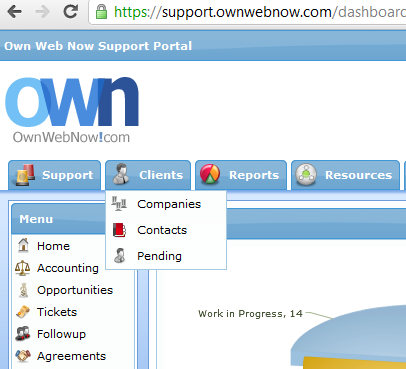
Once the form is filled out, it comes to us (and you) in Shockey Monkey as a pending case:

direct1

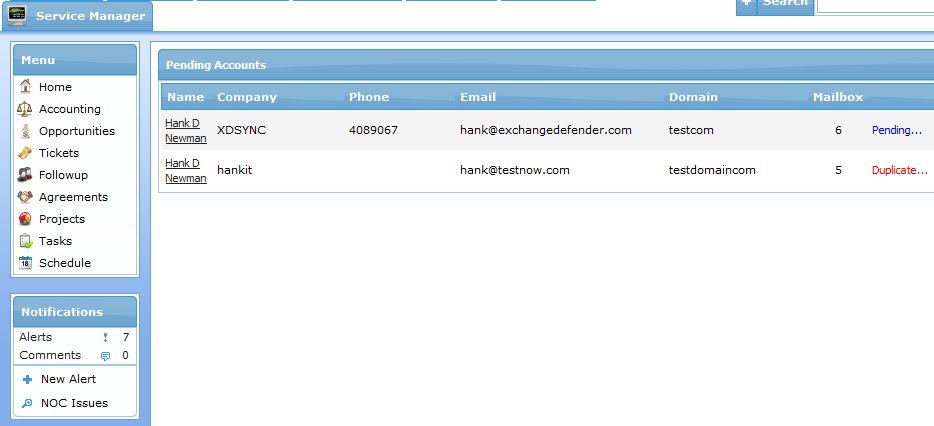
Staff can review the order and start the sales and implementation process. Yes, the implementation is a part of sales, it tells us all the other stuff we could sell them once we’re “in the account” so to speak.

direct2

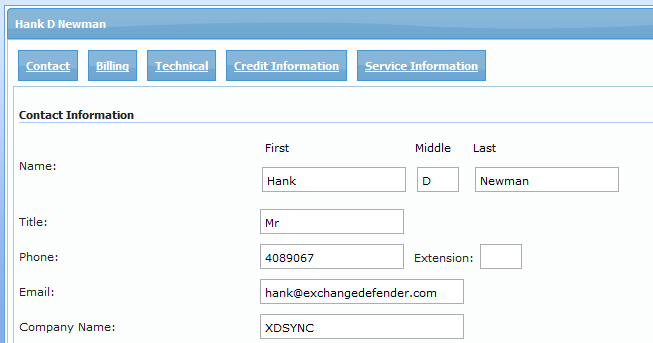
Review their order and start the process of delivering the cloud service:

direct3

The client gets a welcome message saying:

<Generic Welcome Text>. Our goal is to roll out your service correctly the first time without surprises and delays.

   Step 1: Verify the order

   Step 2: Confirm basic service requirements are met

   Step 3: Outline service rollout and deployment

   Step 4: Schedule and deploy the service

In most scenarios this can be done on a single phone call in just a few minutes.

All under your name.

All done by our staff representing your company.

All done from your own web site with no licensing components to worry about, software to support or solution to figure out. We handle it all.

Long Term

We’re going direct. As you.

Over time this will create a revenue stream large enough for you to hire dedicated sales with their own commission structure and get them involved in upselling to the end user.

In the meantime, you don’t have to worry about billing, support or service – they are still your client and you still collect the commissions but you now have new opportunities and revenues.

Here is where it gets really really cool – Kate and I have been talking to other IT vendors in the industry (if you haven’t spoken to us contact me immediately) who want their stuff sold through this process as well.

Your catalog of potential solutions is exploding and you don’t have to sit there and figure them out!

This isn’t just another take on the “Master MSP” concept or the telemarketing sales outsourcing.. this is the extension of your business process to take on the cloud and cloud services without having to deal with all the sticky pieces.

This also isn’t a reduction of your business into just making you a sales guy – it creates a whole division of your company that can be used to bring in new business (cheaply) and use it to fuel existing business lines of everything else you sell.

Just think of Shockey Monkey as an app store for MSPs.

Like I’ve been saying ever since Shockey Monkey launched… it’s not a PSA. And you ought to expect a lot more. Who loves ya?

Kateless

Boss, Pimpin, Rant, Work Ethic
2 Comments

I don’t often write about my personal life on Facebook, I don’t think anyone cares and quite honestly it’s not that exciting at all. I am making an exception today because I do not want anyone to have to go through the kind of harassment I’ve had to endure over the past two years. Perhaps you can share in my pain and know that it.. gets better.

I first met Kate at an IT event a few years ago.

Even though she was from Kentucky she wasn’t married to her brother nor had her hand been promised to kinfolk.. there she was.. a 20something girl at an IT event. She could read and write and that probably should have been my first warning sign that something deeply troubling was brewing underneath. I started working with Kate more closely while she was at her previous job and told her about several areas of my business where she could help launch several community initiatives. This is where the fatal attraction started.

At first it was work related.. “Vlad, I want to go on a trip with you. Let’s go to some IT conference so it seems like it’s work” but quickly got more aggressive “Let’s share a cab.. room..” – When we got to the event it got even more awkward – she would stand next to me, talk to our clients about me, constantly ask me about what I was doing that evening..

Things in the office were not any less hostile. For example, every single phone call started with her flashing us.

kateds

As I made it clear that my feelings were not the same, things got very weird. A strange mix of intensity and disillusionment. And bad hair and body odors. Now I like to think of those as the “good days” when she at least bothered to put on clothes.

Compounded by hundreds of instant messages, voicemails and emails. All supposedly work related but dripping with innuendo and lust.

hairlikeaboss

It got so bad that I gave Shockey Monkey away for free, with free support and then some in hopes that I would bankrupt the company and make a clean, legal break that would not result in my tires being slashed.. or worse.

I gave her the Looks Cloudy blog in hopes she would meet some other people she could obsess about but that made it even worse as she found even more excuses to talk to me about all the men and women and what she thought of them.

Capture2

Eventually she got the message and is finally moving on.

But Seriously…

Obviously all of the above is made up. 🙂

As a CEO of a small business you know the kinds of people that work for you and exactly what their departure from the company is going to look like. Most people are gone with a whimper and replaced with a video, shell script, automation, software or just a simple email reassignment. Then there are people that are, for better or worse, critical to the business because they are both versatile and capable of adjusting quickly to a fast paced nature of ever changing technology business.

Some people are only leaving ExchangeDefender in a body bag.

Others in handcuffs.

I hope I leave in a blaze of glory carrying an empty shotgun, lighter and an empty canister of gasoline in one hand and a letter to Lloyds of London insurance group in the other.

Then there are those that from the moment you hire them you know they are destined for something bigger and you just hope to keep them interested for long enough and that they build a solid foundation for new lines of business down the road.

I originally pitched a gig at OWN two years ago and although I had considered dozens of folks for it, she was pretty much the only one that could do the job. The pitch was simple: “I have a few business plans underway as we transform the cloud business but to be honest they are all just a mess of concepts that you’ll have to clean up and build into real product lines or services” – several months later you saw the launch of Shockey Monkey as a commercial product, then a few months later the launch of Looks Cloudy and tons of other services that you’re yet to hear about.

At ExchageDefender we work as a team – even at the Vice President level – and meet almost daily. Kate didn’t do what she did on her own but she brought a unique skill that very few people have – she was able to read my mind. I could explain what I was thinking about or looking for in very crude terms and she could deliver something real out of that. There was no need to micromanage or be involved on every project, both the little details and the big picture were taken care of without me.

In two years here Kate turned more concepts into products and services than I ever expected. Her role at ExchangeDefender will not be replaced as she has turned one VP role in what will likely be fielded by 3-5 different product managers and editors.

Folks always ask me about defining professional success: It’s leaving far more than what you found when you got there. That’s capitalism, that is entrepreneurism – building, growing and constantly looking to make things better.

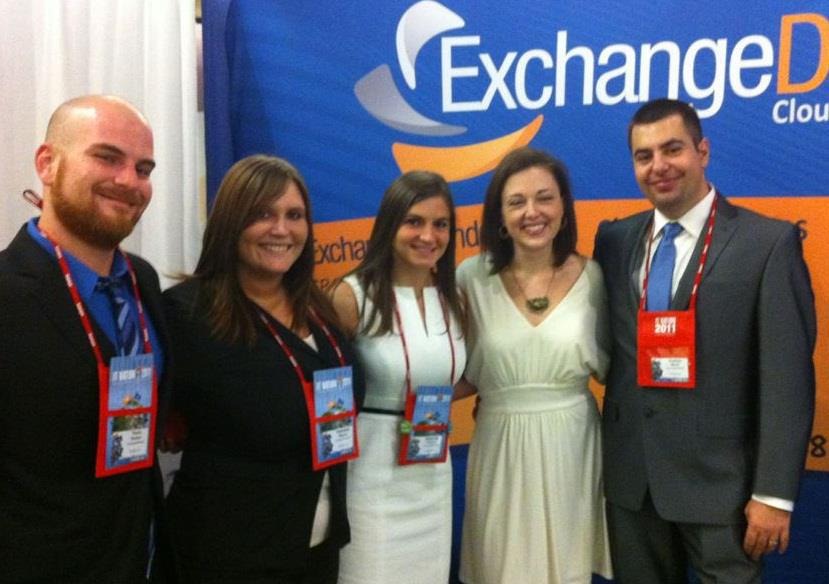
teamshot

Kate is leaving the ExchangeDefender family and I could not be more proud of what she has accomplished here and what she has helped us become. It is in no small part thanks to her that thousands of IT organizations now have an amazing platform to build their business. The new role that she is taking on will be announced next week and I know she will do an outstanding job at it.

We will miss her.

P.S. Yes, her severance package does include a hairbrush. Smile

Designing Consumerization

IT Business
Comments Off on Designing Consumerization

Sidenote: If you’re curious what I’m actually working on, tune in to the ExchangeDefender Executive Podcast series. It’s me and my upper management talking about the projects we’re working on this day/week/month/year. Vladville articles are for the most part my general takes mixed in with some humor and other commercially inadequate concepts.

Before I explain what I’m up to allow me to put the whole consumerization concept into perspective. There is a reason big box manufacturers are struggling and that reason is often not discussed because it’s not commercially viable to a lot of people. It’s not just the cloud that is exterminating the dinosaurs of the IT age, or Apple alone for that matter. It’s not only Microsoft’s mismanagement and lack of focus, nor simply the  workload shifting onto mobile devices at a more rapid pace. It’s that the design parameters have changed:

Over time every point of the server grade equipment became mission critical. It also became so expensive that the tollerance for failure in a single box almost vanished. At the same time, the old .NET development model (who cares about the bloat, just tell them they need more resources) got displaced by something else.

Instead of buying a monster server with monster storage and a monster Oracle or Microsoft database that was licensed per processor, folks started using open source databases and spreading stuff over multiple systems once we didn’t have to design a single point of failure for the sake of hardware and software pricing savings.

If all of this makes no sense at all you’re understanding this perfectly!

For example, a storage server used to be a very beefy high end server with high end storage controller, storage controller battery backup, high end server case with redundant power connections and high end drives. And while we’re spending all this money, whats a few hundred or even thousand more to get high end drives – we can never afford for this stuff to crash! But then boom, up in smoke it all goes and we end up looking like idiots. To an extent, we are, because there are different ways to design storage when you focus on replication and plan for failure instead of hoping that the redundancy will make the failure go unnoticed with fast failover.

When you look at companies like Amazon, RackSpace, Facebook and even some of Microsoft’s public designs, there is no high end hardware in sight. It’s all commodity gear all constantly replicating and completely disposable at any point in time. It’s not turnkey by any means though, design of the software – from access to storage to backups and replication – all has to fit and be designed to deal with less than 99.999% and deliver even better results than that: with spikes in demand to boot!

Designing Shockey Monkey RMM Backends

Note: The title is highly misleading; We’re not making anything nearly as sophisticated as Level Platforms or Kaseya because we business owners aren’t going to start writing scripts – but they are going to want to know when the hard drive is about to blow up.

In order for Shockey Monkey RMM to work and for our RMM partners to fit into the Shockey Monkey model perfectly we need to be capable of processing an insane amount of data. Which ain’t gonna happen because Shockey Monkey is free. Just because it can be monitored doesn’t mean it needs to be logged and reported, just because it can be logged and reported doesn’t mean it’s relevant to anyone and just because it might be relevant doesn’t mean it needs to be accessible quickly.

Moderm RDBMS (SQL stuff like Microsoft, Oracle, MySQL, etc) are designed with the old school servers in mind – fast, redundant and fat. All the data you wish to keep gets recorded and accessed at roughly the same speed and similar medium which can be related, indexed and cross-referenced as necessary. Except.. well, read the paragraph above – there is far too much useless crap which may under certain circumstances become mission critical.

How do you design for something like that? Even if you go cheap and use free software like MySQL you have a limitation of roughly 10,000 tables under ext3 and performance tends to drop off well before that.

Event Proxy – Event proxy is a simple load balanced application that will look at all the data that is being fed from an RMM. Some of that data is relational (devices, alerts) and some is junk (software updates, application notifications, error context/data). The job of the event proxy is to look at the kind of data it’s being sent to it over the network and dump it to the correct data storage medium – some nodb, some mysql, some into plain text files. Yeah, we’re partying like it’s 1999.

Report Proxy – The reverse of the above. Once someone asks for relevant vs. junk data reassemble it back together.

Reverse Configuration – If you look at the RMM agents they tend to be pretty dumb and lightweight, most of the data intelligence and manipulation happens on the server. In order to make something free we’ll have to turn the tables on this. First, the agent will have to become a lot smarter in terms of interpreting the rules of what needs to be saved on the server and what could be saved on the client itself. By contrast, servers need to get better at tracking their agents and start pulling some data instead of just waiting for it. After all, the agents aren’t dumb by accident, you can’t make them be the biggest resource hog on the workstation, they need to stay lean.

What about the consumer?

Most people misunderstand the concept of consumerization.

It’s not about something being free, that’s a marketing gimmick.

It’s not about something being basic, that’s why there are so many apps that nobody ever downloads.

It’s all about what the consumer wants: Which is simplicity.

If the user has to think, follow directions and steps, calculate tradeoffs or consider alternatives.. all you’re doing is giving them reasons not to use your app.

This overcrowded, overpriced and overcomplicated industry can survive and thrive.

But in order to do so it must build the bridge between the users expectations (free and simple) and business demands (redundant and accountable).

Obviously, we’ve built Shockey Monkey to be that bridge. And it’s working.

To hire or not to hire remote workers?

Boss
Comments Off on To hire or not to hire remote workers?

The question about remote employees comes up a lot and “remote work” is simply the norm these days, regardless of your opinion of it. I only say that it’s an opinion because of the connotation that some of the older generations tend to have towards their standards of professionalism which are constantly changing along with our society. These debates often come down to the matter of opinion in the end so I’ll try to focus on the facts at least as they relate to my business.

Pro – Costs. Office and all it entails (food, drinks, parking spaces, office equipment and space) tends to be quite expensive in terms of cash. Also in terms of productivity – if you’re dealing with a fire or have stringed back to back shifts I don’t want you driving. If we need to get something done I’d rather you take the 2 hours you would have spent in traffic and use them towards getting things done.

Pro – Talent. Sometimes you can’t get the same level of talent locally. Keep in mind that in the modern world (ex-retail/manufacturing) the “talent” doesn’t only consist of skills but also a social fit with the organization and the people you work with. We’ve used the same designer for the past decade – and I met her twice. She has designed virtually every web site and every product UI at OWN mostly because she knows what I want and has consistently taken my concepts and turned them into reality. Are there better, cheaper, more qualified people in Orlando? In a sense of the above criteria (mind readers) I’d have to say no.

Cons – Taxes. Dealing with the payroll, unemployment, city and state taxing systems is a nightmare. Particularly in the states that still allow you to marry your cousin and where 1/2 of the GDP comes from muddin’ and coon huntin’. If you hire someone out of these states or municipalities (where tax forms are still being filled out on a scantron with a #2 pencil) you will waste a lot of time and money.

money-toiletCons – Accountability. Most employees are not accountable. Even in an office setting – where they know every click, screen and email they send is logged, recorded and subject to review – I am constantly seeing people watching NBA videos, posting on the boards, watching Youtube videos or other stuff. The following is from the recent job review:

“Typically he is good. But if it’s one of the days when he decides to take a vacation at his keyboard all bets are off.”

So even though it’s very hard to keep people completely accountable anywhere (without running a military operation) home work suffers from accidental unaccountability. This is when they are actually working but the one time you needed to speak to them they went into the bathroom or went to answer the door or were out to lunch.

Reconciling Cons & Pros

First, you should only hire remote workers if you can trust them.

Second, even though you trust them, it should be convenient and fault-proof to track them – we use video conferencing excessively and we even have video streams to folks and offices on big screens around the clock. When I need to talk to someone all I have to do is look at the monitor and talk to it like you were in the office.

Third, try not to think about the money, think about the goals and milestones. Business owner brain is trained to think in the output per hour per dollar metric. If you shift that to get it done by X metric things get much better. For example – if I can’t reach you when you’re supposed to be at work, and you took a long lunch and you have a vet appointment and your roof is leaking and you need to reseal it right now – ok. But the following items need to be on my desk by tomorrow. Tends to work. This doesn’t mean that your employee won’t want to stab you while working at 4am to get stuff done, but you also aren’t dragging them into a disciplinary meeting because they were an hour late to work.

Remote or stay-at-home work can deliver tremendous benefits to your organization and if you employ some of the technology that’s practically consumer grade and free these days it can do wonders for you. Of course you should track your remote employees better by sign up for Shockey Monkey, which coincidentally was almost 100% developed content-wise remotely. The success of the relationship depends on you as much as the employee – if you understand that the levels of discipline, wardrobe and hygiene at home are not the same as they are in an office then you can start to focus on the results people can accomplish when they are comfortable instead of the results they are forced to achieve when they are tightly controlled. Balancing both at the same time can be a challenge – but you’re hiring remote workers because they are better than what you have locally to begin with so it comes with a bit of give and take either way.