Two more days till the first issue, gonna be big. http://www.vladville.com/signup.php
-Vlad
Two more days till the first issue, gonna be big. http://www.vladville.com/signup.php
-Vlad
Royal Oak, MI, October 3, 2008: Amy Babinchak and Eriq Neale, MS MVP’s, Authors and Speakers, have teamed up in a new business venture to provide remote support services to IT professionals. By formalizing and centralizing the remote support services of highly skilled professionals across a wide range of products ThirdTier.net will be the place where IT professionals turn to when they need assistance to resolve that tough problem for their client. Third Tier will also offer SMB focused vendors the solution to the difficult problem of supporting a wide variety of skill sets in the SMB market space, thus making it easier for them to offer their products to small business customers.
· Central location for IT Professionals to contract experts on a wide variety of technologies to remotely assist in problem resolution.
· Experts providing vendors the solution to product support in the SMB market space.
….
indianinthebucket.com for bottom-feeding NOC services, thirdtier.net for the expert services.
If you happen to be in Downtown Seattle this weekend, track me down.. I’ll be at the SBS UG meeting tonight to talk about a new community project, out drinking with the boys later tonight, and tomorrow morning/afternoon just hanging out at the hotel. If you’re one of my partners and we’ve never met face to face track me down.
* Ok, obligatory community note here – Yes, I have tshirts. I am also here on behalf of Andy Goodman as the Deputy Riffraff General. No, I am not going to the Garbage Truck Driver Convention.
Starting with next week I am coming back to work full time (and then some) from my paternity leave. Depending on the little monkey’s sleep schedule I might be putting in a lot more hours in odd hours of the night and I’m committing to my comeback full on.
So I have started something.. several things in fact..
My first goal is to clean up Vladville a little. There are a lot of serious technical and business articles I have written but decided to pull back from Vladville since they don’t really fit into the vibe of the fun-n-gun style of humor displayed here.
So sign up for it here
Vladville Newsletter
It’s free and it’s actual content and it’s what I actually do (sans the satirical view of it you will still get here daily 🙂 I promise you will love it.
Take a room full of MVPs and give them a bunch of interconnected servers for lab purposes. Take away Internet access. What happens next?
Monkeys launch a mailbomb at each other. It’s the equivalent of a slap fight, for geeks.
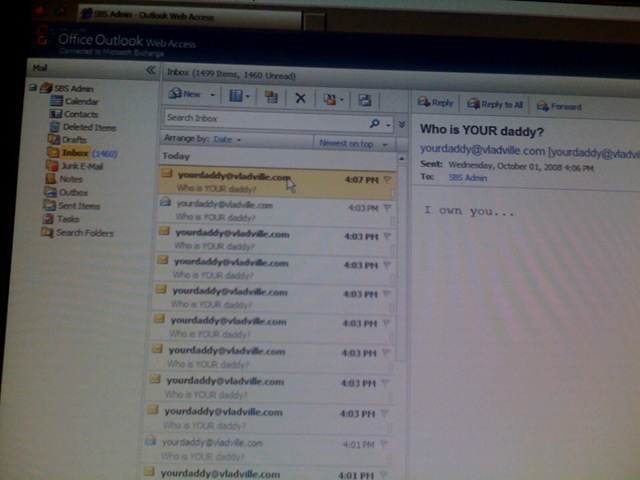
Vlad: At some level this is really childish..
Tim: This is childish at every level..
Who is YOUR daddy Wayne & Dana, who is your daddy?
tan dan tan dan tan dan tan dan.. Moooortaaaalll Kommmbaaaaat!
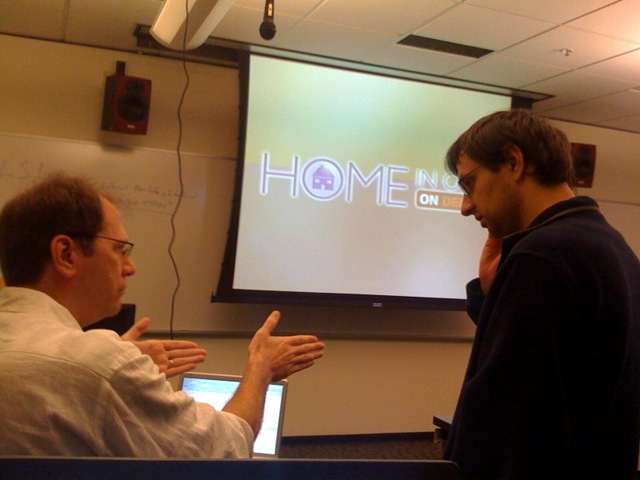
Never in my life have I imagined I would see a live human reenactment of the final move in a Mortal Kombat video game. As I’ve mentioned previously, I’m in Redmond this week getting the deep dive SBS 2008 training with some other fellow MVPs. This is a scene from earlier today, and in my opinion it is fairly remarkable. I never thought I’d be able to capture the very moment when the persons soul leaves his body at the exact moment he loses all hope for humanity and his vocational contribution to it:
SBS 2008 developer, who wrote the console.exe management interface for Cougar, checks for his pulse while Jeff Middleton, of SBS Migration fame, attempts to explain how a simple schema change would only require 3 lines of code.
Bonus points for the dev for keeping his carcass vertical 🙂
Microsoft MVP program, contributing to Microsoft Developer attrition since 1997.
Which brings me to an interesting symbiosis software developers (me) and very passionate users (MVPs) have when it comes to social interaction. In digital interaction (forums, bug sites, trouble tickets) the responses are raw and nearly primal – “This is broken – fix it” with the response “It’s like that by design”. In plain terms the users are telling developers that their software sucks, and the developers are telling the users to stop bitching and go away because it won’t be fixed. It’s a conversation that repeats often so today I asked:
Dana Epp: I bugged it and the bug was closed as “By design.”
Vlad Mazek: How come you guys never let me get away with that?
Dean Calvert: Because we know where you live.
There is something to be said about the personal connection the software has to the way business gets done and value is contributed to both the person designing the software to solve the problem, person implementing the software to help the end user be more effective at their task and the end user who ultimately makes a significant impact with the software to improve something else.
When all three of these individuals connect and are on the same page the results are astonishing.
This is why OWN invests so much in remaining a partner-only company and why Microsoft pours so much money and time in the MVP program and why people continue to put up with difficult problems and people to improve the entire chain.
At Own Web Now we have a picture of Nick Whittome, which I am not allowed to publish, that I put in my IM icon every Friday when we do code reviews. Nick is my residential code review scarecrow – every time you take a shortcut Nick will find it and kick you in the ass about it. Why? Because people like Nick Whittome and Howard Cunningham and Dave Sobel and a few thousand others constantly give us feedback on our solutions. They aren’t paid for this role, nor do their clients pay for them to work with us, nor does this go under the line item under any of the financial reports. And when my team looks at these kick in the balls tickets and bug tracks it is hard not to de-humanize the feedback as a complaint and reflection of personal incompetence. It is hard to differentiate where “you suck” starts and “this would fix the problem” begins.
This, in my opinion, is why working with the vendors, partners, end users and everyone involved in the software consumption cycle is extremely important. Once you get beyond taking the criticism personally you can move on to the positive side of what everything you’ve dedicated at least 8 hours a day goes to. It’s very motivating, in my opinion moreso than money.
So I’m up here in Redmond with a bunch of SBS MVPs taking part in the SBS training. Apparently this is the PSS deep dive, the type of training the Microsoft PSS reps get on the product. So technically, at the end of this we are expected to be able to take a PSS call and help a customer.
Thank you, come again.
Of course, since we all know each other it’s really just a day of carefully placed digs and cracks at the expense of everyone around you. Of course, being SBSers there are endless jokes about the size, servers with training wheels, etc. This particular specimen (Tim Barrett) made a mistake of sitting next to the wadding pool 🙂

Oh, and if you happen to be a Security / SBS MVP, like this one, you should make sure that people aren’t standing behind you with a camera while you are typing a password into a migration tool that doesn’t mask them 🙂

Fun, fun, fun..
You know we are in trouble when even Bush can’t dumb it down just how messed up the financial systems are. When I explain to people the business of banking I get a range of epiphanies from “oh, so this is supposed to happen” to “that’s just not fair“
Truth is, not only is it right, it is the very definition and spirit of the American way and capitalism itself. In a nutshell:
Financial prosperity of a capitalist system is dependant on volume always increasing. More credit extensions, more sales, more deposits, more loans, more taxpayers more people. In effect, your very social security benefits and retirement are dependant on there being enough suckers in the workforce making deposits between the age you retire and the age you drop dead. The profitability of the banking system is dependant on ever-expanding credit, with ever-expanding deposits followed by ever-expanding loans. Believe it or not, the bank business profits do not come from your personalized check orders every 5-7 years.
So how do banks make money? In United States we have what is called a fractional reserve banking system under which the central bank sets the reserve rate, or the amount of money the bank is required to keep in reserve to meet the demands of daily withdrawals and other business. So every time you make a deposit into a bank you are not dropping a pile of gold coins which then goes into the back of the bank to be loaded onto a horse drawn carriage and pulled across the dusty planes of Texas. What you are actually doing is making a loan to the bank expecting a full repayment. What the bank does is set aside the reserve rate (let’s say 10% of the deposit) and use the remaining 90% of the deposit for a commercial loan to someone else. They in turn take the loan and deposit it into the bank and the process repeats – save 10%, loan out 90% and so on.
The profitability of the banking industry is tied to the loans it makes. As it makes these loans it then packages them up and sells them to another financial institution which is the designated backer of such loans. Freddie Mac and Fannie Mae, two names you’ve heard a lot about, were the designated backers or purchasers of such loans.
Here is where things get ugly. During the Clinton years there was a huge push for financial institutions to deregulate the process of who backs loans, how and when. It established a deregulated quazi-market under which the loan packages could be traded almost like stocks and the companies that purchased these securities had to mark them to market – that is, the values of these loans had to be adjusted on the books to what their real value was. So long as the housing prices appreciated in value, so would the value of these loan packages and the more money that was loaned out for housing, regardless of whether the borrower was able to repay the loan, the better it looked for the financial institutions because the value of their books kept on going up. It’s like holding a stock that perpetually increases in value.
You know what happened next 🙂 As the housing bubble popped folks holding these loan packages could not get rid of them fast enough. They piled up at Fannie Mae and Freddie Mac as well as at some of the largest brokerages in the world which served as a medium for these transactions. As they could no longer sell and offload these loans, and as their value started to fall through the ground, so did the company.
Sure, that’s ugly. But here is the really messed up part:
Remember the 10% (or currently sanctioned amount) that the bank has to hold in reserve to meet daily withdrawals and regular business operations? Yeah, that works great if everyone doesn’t try to take their money out at the same time.
If more than the 10% of the deposits get called in the bank has to liquidate some assets (i.e., the $30,000 loan it extended to a college kid so he can rice out his Scion sC and put spinners on it) and as more stuff heads for liquidation so does the bank – it fails, just like any other business, because it is unable to meet its financial obligations.
In fact, this is how the Great Depression started, people started a run on banks so their money wouldn’t disappear. In part this gave birth to FDIC, the federally insured deposit accounts and so on. Psst. Did you know that a bank can actually temporarily suspend withdrawals and keep you from your money? What is the first thing you are thinking about right now? I’ve got bills to pay, time to get some ca$h. This is called a bank run.
So what are we bailing out?
 The $700 billion dollar package being debated in Washington DC is to help back the loans that are considered insolvent. You’ve read that right: We are being asked to shell out $700 billion to cover the repayment of loans that the banks deem impossible to collect. The dude behind this proposal? Henry “Hank” Paulson, former CEO of Goldman Sachs that presided over the company while the current deregulation took place and made it possible for the ridiculous loans to be traded around, current United States Treasury Secretary and board member of IMF, whose job is to support regulation of financial markets and financial health of the United States of America. What he is asking for is $700 billion to spot the bad decisions made by him that eventually lead to the problems we have now.
And you know what – you’re going to pay it. 🙂
Here is the bottom line: The reason there is a panic right now and you haven’t heard anything about this for years is due to the fact that there is a huge bank run underway in United States. As this is going on, the banks are refusing to issue loans no matter how good and solvent the loan may be. The banks are concerned about the massive debt they have on books that they are not sure they will be able to collect, so they are refusing to extend any credit because they need to keep the bank operations going.
Back to the financial prosperity of a capitalist system and how it impacts even us – even Karl Palachuk, recession blindfolded and cork 2″ in his ears, is unable to ignore this one. If you do HaaS and depend on readily available credit and ability to pay off the infrastructure purchases over time you might find your next big purchase and next big financing deal declined for no apparent reason. We are a nation that depends on readily availability of huge sums of money to make business deals happen without having 100% asset solvency (ie, cash on hand to buy stuff).
The $700 billion is going, in part, to keep things going as they have been going and effectively forgive the massive near criminal greed of bank executives, and it will be approved and go through because the financial prosperity of our system depends on our ability to overindulge and pass the bill off to the next sucker in line.
So long as the line of suckers is perpetual and we can print funny money to get a free pass whenever we are called on the inherent flaws of our society, the American dream lives on.
Only in America and God Bless America.
Let’s face it, times are hard. Depending on where you are geographically, times are really hard to depressing. We’re doing incredibly well (September on course to be the biggest month on record ever) but we saw this thing coming and redid our portfolio in order to keep on growing amid the market meltdown. Truth is, when people have less and less money coming in you have to help them spend less money. The pie-in-the-sky productivity savings and workforce optimizations do not work in this market, people do not invest in their information technology, they try to make it fill the gap and even find ways to immediately reduce costs.
Features? Forget about it. Upgrades? Dream on. Migration with the promise of a new OS that hasn’t been battle tested with all LOBs with documented support? Lights out.
Roll in the crumbling financial markets, continued housing slide, election throwdowns..
If your big play for 2008-2009 fiscal year was SBS or EBS upgrades and deployments, you’re.. well, you know. ___ed. Insert your favorite expletive there.
Thankfully, Microsoft is being very nice to the MVP bunch and has invited us up to Redmond for a week of SBS training. I’ve decided to take the trip as well since a lot of my partners are in the SBS land and I know you folks are struggling. We are doing what we can at OWN to help with the cause because we know that as bad as things are right now the crisis always shakes out the weakest fruit and makes the marketplace better and more profitable for the rest of us. So we are doing what we can to provide the training, ramp up our partner community and give it a shot in the arm it needs.
But what always comes up with projects like this is that there is a demand that it be free. So I figured I’d open up just what the cost of any “free” venture is. Let’s assume that my time is worth nothing, that I will collect salary no matter what. The price of the free training is still:
Plane ticket: $600
Hotel: $1,300
Cab, tips, etc: $120
So even eliminating the enormous cost of spending time away from business for a week, the cost of free training is over $2K. Folks like to complain about how little comes out of the conferences in terms of free videos, training, recordings and blog posts. Folks want to feel like they are there. Truth of the matter is, there is no such thing as free – someone always pays – and even when folks do something for free it buys them no goodwill – most people go about business as usual and reward companies on a selection criteria that is void of community contributions. Some solutions, as I’ve noted here, have even died in the SMB space due to the lack of support. Is it fair? Of course, absolutely, but that explains the suckiness of the sharing that is seen from the top down. I suppose I’m just a dumbass, so you’ll see something pretty special come around next weekend. Stay tuned.
Or so says Larry Ellison. (here is a shorter summary):
“The interesting thing about cloud computing is that we’ve redefined cloud computing to include everything that we already do. I can’t think of anything that isn’t cloud computing with all of these announcements. The computer industry is the only industry that is more fashion-driven than women’s fashion. Maybe I’m an idiot, but I have no idea what anyone is talking about. What is it? It’s complete gibberish. It’s insane. When is this idiocy going to stop?
We’ll make cloud computing announcements. I’m not going to fight this thing. But I don’t understand what we would do differently in the light of cloud computing other than change the wording of some of our ads. That’s my view.”
This from a guy that effectively pushed for cloud computing during the middle of the last decade, dearly funded the Network Computer concept that many cloud providers now see as the future and even powers the cloud computing’s shining star: SalesForce.
So what is pissing off Larry and Oracle?
The same thing that’s pissing off Microsoft, Apple and any other traditional infrastructure company. The fact that their premium solutions are becoming a commodity, that their premium solutions require so much training, upkeep and migration scenarios and planning that even the most skilled of IT staff need retrain every few years while the software companies themselves push for software licensing subscriptions while offering no compelling financial or operational reason to keep the data center in the office.
What’s more, guess what the kids are writing apps on these days. It’s not Oracle. It’s not Visual Studio.
This creates a huge problem for Software+MandatorySubscription+MandatoryMigration that companies like Microsoft offer. And as they struggle to implement the new partner programs and go to market as service organizations that they really are not, a whole new generation of application is coming with the next generation only bound by it’s creativity not by the built-in features it can afford or that the other vendors demand be in place.
Hardware has long been a commodity. Operating systems are almost there.
Where does that put guys like Larry, that make multimillion dollar sales orders for what is effectively becoming a near-free product?
Bashing the solutions they themselves envisioned and conceptualized a decade ago.
Evolution………… No, the dinosaurs aren’t going to disappear overnight, but their numbers are greatly diminishing. It’s not fashion Larry, it’s business, and I can assure you that lots of it is leaving your pipeline and going into mine.

© 2005– Vladimir Mazek
All rights reserved.
Content is provided AS-IS without warranty of any kind.