
Loyalty Not Included

Boss
1 Comment

Modern workplace, and the behavior of everyone in it, has changed since the 50’s. Small businesses owners often find frustration in the perceived lack of gratitude and loyalty they get from employees that they feel they are treating like family. Conversely, employees often feel like they are being treated like children and compensated on a level of an allowance with talking down every time they break curfew (late to work) or make a mistake.

Bottom line is, there are some terrible people out there.

There are as many terrible bosses as there are terrible employees. There are mismatches between company culture and employee personality. The communication between the employees and managers sucks because the goal is performance, not alignment and nobody wants to do any more than they think they should.

What I’m trying to say is, life isn’t fair and sometimes the employees get screwed and sometimes the employer gets screwed. You as the employer make more money so you have to take more shit and grief for it. Sorry, it comes with territory.

Shit your employees will do to you

man1Strategically and intentionally sabotaging other employees, departments, products and services  they don’t like.

Quit with no notice.

Make all their worldly problems root in something you have unjustly done to them.

Ask for preferential treatment while complaining about the preferential treatment of others.

Consider professional criticism as a personal affront.

Know how to do your (and their managers and their coworkers) job better than you while being completely incompetent at the one they are assigned to.

Lie. Constantly. (Hint: Move them to sales)

Bring their home problems to work: From vacation and wedding planning to drug trafficking using your corporate UPS box (yes, it happened)

Ask you to pay for their training and immediately upon passing the exam ask for a promotion, raise and more.

What to do with shitty employees

Fucking fire their fucking ass right now.

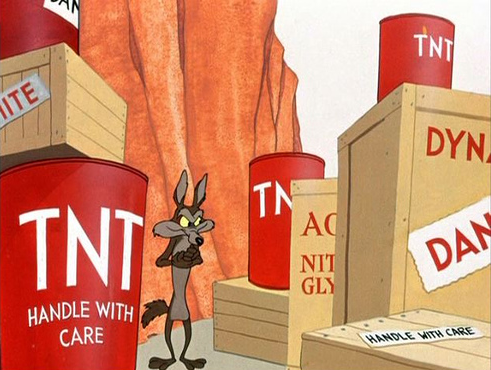
I have to say that my biggest regret is not getting rid of bad people at the first opportunity I had. Unfortunately, at times I let the potential of the person to perform at their god given talent cloud the evidence that I should strap sticks of dynamite to their chest and shoot them out of a cannon Road Runner style.

Those homicidal feelings are normal.

Truth is, some of my best employees that are still with me after all of these years are the folks that understand the reality that everyone has a bad day, month even a year. It’s all about showing up, sometimes you win sometimes you lose but you show up again. People like that can see past their bosses mistakes and bosses can let the shit slide because hey, nobody is perfect and we don’t aim for perfection. This isn’t the military, we aren’t disarming a nuke. We’re killing emails advertising dick pills. Perspective.

Then there are bad people. And there are more bad people than good. So the next time you’re in a spot wondering what you did wrong… just take a deep breath and focus on moving forward. Take good with the bad and align people with your mission.

Treat people right and set the right expectations and keep on moving the ball towards the end zone.

man2Unless you’re sitting handcuffed in prison drenched in blood because you unloaded an AR-15 at work… it’s gonna be alright. So long as nobody got shot, everything is gonna be alright.

If that fails, remember that it’s good to be the king. It sure as hell beats working for someone else and nobody wants to go to jail.

Yes, I’m alive

Uncategorized
Comments Off on Yes, I’m alive

Sorry I haven’t had the energy to post anything on Vladville. I’m OK, everything is OK, life is good, etc. I’ll be posting new stuff this week.

IMG_5475If you really must know, I’ve been really depressed for the past two weeks. I don’t know if “depression” is the right term for it, it’s just that I’ve been working on a project that I endearingly call “Leaking Shit Fountain” and as soon as I plug one leak, shit starts coming out of 5 other cracks. I’m working on something that is not my strong area, I’m the only one that can do it and I have nobody else I can delegate it to and I’m literally reconciling years worth of shit that has piled on since. Making matters worse, I can’t really blame the person that buried me in all this shit because it’s ultimately my responsibility to manage the product and the image we put out there and well, I trusted the wrong person who was incapable of doing the job and that’s my bad. Every day I wake up I am further away from being done, every time I get one thing addressed few more issues pop up and the incredible volume of stupidity that I have to deal with makes me stop, think, lose focus and get set back even further. It’s really a miserable situation that continues to kick me in the balls and I have no way of doing anything constructive but to lower my head and continue working until I’ve addressed all the leaking cracks in the fountain.



So everything is OK, just feeling defeated and trying to fix my past mistakes.

I’ll be back.

SM Mobile Strategy & Growth

IT Business, Shockey Monkey, SMB
Comments Off on SM Mobile Strategy & Growth

A little bit on strategery here just so we’re smoking the same stuff..

Today we announced the Android native application for Shockey Monkey:

clip_image002 

It’s joining native applications on iPhone and iPad – none of that webkit / slow junk anymore, we’re spending a lot of time expanding the mobile offering very quickly and I thought I’d offer you some perspective as to why in case you haven’t figured it out yet.

Why?

As you’ve seen by our ExchangeDefender business model, things are growing very rapidly and we are expanding our solution portfolio in a manner that we believe will allow our partners to grow exponentially.

The launch of branded support and branded migration services removes the “human”  “tech” factor involved in service delivery, it basically allows the solution provider to not be a salesman and a plumber at the same time. Everyone wants the salesman salary, nobody wants the sanitary waste mess on their hands that comes from supporting someone elses product/service or the solution. At the same time, there are no shortcuts – someone still has to do the work, the tools are still necessary to fall back on if “best case scenario” doesn’t work out and… well, I wish I had more developers and I wish I could take on more business but we’re moving as fast as possible with the resources we’ve got and we’re trying to do it right instead of doing it quick.

So what you are seeing with the agenda of Shockey Monkey and ExchangeDefender – with the fascination with mobility and the fascination with the remote access/management with Unicorn 2 and focus on storage with LocalCloud – is a convergence of the stuff we know works and stuff our clients and partners are begging us for.

This tends to piss people off. I’m sorry. I’m really sorry. I know that you’d rather see us focus on the legacy stuff and you’d rather optimize the heck out of the old way of doing things… but my business model is very simple: I do what people are willing to pay for. And the cold hard ugly truth is that people are not willing to pay the top dollar for minor enhancements of stuff they already have that works for them.

They want a solution that dramatically improves their efficiency.

While a tweak or two to the desktop or web experience is always on a to-do list, I’m getting hounded day and night to support mobile devices because high profile (read: employees in organizations in charge of spending money) are not walking around with laptops.

While a solution to a gaping hole in the portfolio might make some of my partners more entrenched with a client… the ability to offer migrations, support, new solutions and not having to do any of the hard work to get it – will grow your business, not just make it stickier until the client pulls the plug.

I understand that there is a conflict. There is comfort in safety and lack of ground breaking changes minimizes the risk of having to do more work. I understand that.

The positive solution to this conflict is to be able to do more.

We are seeing the opportunity in converging the service (migrations, support, billing) with the products (ExchangeDefender, cloud, Exchange, Lync, storage, Compliance Encryption and Archiving) with the business process (Shockey Monkey) and deliver to small and medium business what enterprise has been able to enjoy for a decade. Like an IBM commercial, minus the 8 figure bill.

The good news is that if you really hate me and what we’re doing, you have other options. We’ve considered that. Other options are doing nothing (going to conferences trying to find more clients, trying to find more people to sell legacy stuff) or fortifying a legacy tool with stuff that would make your business look amazing for 2010.

We’re investing in our solution and in our partners to make you great for 2014 and beyond because we have full faith that we’re not going to be going out of business (or on the sales block) anytime soon. Perhaps that’s something you ought to ask yourself when it comes to the vendor choices you’re making – is the service changing with the market demands or are they just trying to monetize (ie, take more of your money sooner) me in the short term because they have no faith in me long term.

That answer ought to answer far more than I ever could on this blog.

What is your business really worth?

IT Business
Comments Off on What is your business really worth?

Business valuation is hardly connected to reality and sales prices can wildly swing depending on whether the industry is growing, if the technology is truly unique or it’s hard to find talent. Sadly, most companies look for a seller out of necessity not out of opportunity and are typically gutted of both valuable items and opportunities by the time they are forced into sell-or-fold. Recently we got a chance to review the offer sheet of one of our competitors as they put themselves on the market and I think it offers a valuable lesson for anyone building a business towards the valuable exit.

The Valuation Math

The key to valuation is knowing that bankers can smell the valuation padding. Mostly because the same guys that advise the seller to manipulate their financials are also unwinding it on the other side for the buyer.

When a company doubles in the last year, after barely breaking even for nearly a decade, all through one or two partners – through which it’s selling stuff at cost – it doesn’t paint a wildly successful company with growth potential, it paints a desperate one on the way out.

If a company is growing while it’s margins are imploding, that is not a growing business. It’s the very definition of churn.

If you look at your revenue/margin year over year and your profit margin is dwindling you either have to make a hard decision to chop off the golden anchor business that’s sinking you or come to terms that the profitless revenues won’t get it done. P.S. This is also a trick companies play on outside investors and banks – though it never works – they make it seem like they are growing where they are literally just giving it away. The excuse is “well, one day we’ll just raise prices” but if that was in the cards company wouldn’t be on sale.

The IP/Tech

Every software company I have ever looked at pretends to be Apple. Just because you run your office on a homebrew firmware on dd-wrt does not make you the next Cisco.

When a company derives most of it’s profits from licensing third party software and solutions.. it has no discernable value towards it’s tech. Maybe over time most hardware will qualify as vintage and will be highly valued on eBay or electronics clubs.. by someone..

If you are sitting on a ton of hardware, licensing, third party solution stacks and integration projects the core value of your company is significantly lower than what you think it is.

The People

Finally, the monkey circus.

“Our people are geniuses and are highly respected in our field.”

Oh yeah? If they were so smart why are they working for you while you’re here trying to sell a box of fleas?

If the later part of that line is true, they have likely been sitting on the fence waiting for a major “buyout” so they can cash out and get the hell out of dodge for a long time. I’m sure they are fantastic but this isn’t Bell Labs with Nobel laureates – and they are itching to get away from this business as bad as you are.

The Client Base

The client base can tell you how the company is really doing.

Did most business come aboard recently? If so, at what profit margin?

Did the company retain any truly long term clients? How big are they and have they been growing?

Most companies, after they get redrawn for sale, make a mistake of scraping their legacy business for new business and in the process get a ton of new clients that aren’t very profitable and will likely switch as fast as humanly possible as soon as a more cost friendly solution came around anyhow.

Further complicating things is that the change in management often opens up the likelyhood that the clients will bolt under new management for something else. When you look at what you are buying and consider raising prices on the existing client base, what are the odds the clients stay on board? If both the price and management shift (and along with it the staff) then anything you added recently might be heading for the exit as well.

The Summary of Despair

People have emotional attachment to the things they built and feel that the value far exceeds what the company is currently worth. So instead of proving that, they are offended when they take it to a third party that has to do the hard work.

When you buy a software business, and an antispam company qualifies as that, you are essentially buying clients and contracts. And when the company is obviously struggling and brings in a lot of money that it’s making slim to nothing on – that’s not an opportunity, that’s a liability waiting to explode. Thinking that such a nightmare is worth millions isn’t even viable from the standpoint of basic arithmetic of just multiplying the profit numbers considering how much of it comes from few large resellers and distributors. Any one of whom can dip at any time.

MSPs need to do the exact opposite of what is “logical” when prepping for a business sale. Money needs to come from a lot of different areas, the staff has to be disposable, the liabilities and debt need to be damn near none and your profit margin needs to be climbing not disappearing.

But then again, if you ran your business like that in the first place you wouldn’t be the one being shopped around.

Stupid or unmotivated?

Boss
Comments Off on Stupid or unmotivated?

ernestMy basic thesis is that there are too many fucking morons out there in corporate America. My friend Kate tends to disagree, believing that most people are smart but just not very motivated – as in they have the capability to be successful but not the catalyst to convert their god given potential into action.

In other words, all people walking towards a cliff can see that they are about to die but some do not perceive warning signs and guard rails as life threatening until they are falling to their death. To which extent they are willing to stop at the warning sign, at the guard rail, at the edge of the cliff or holding on to the edge is simply a matter of outside factors.

My explanation is far simpler: You’re walking off the cliff to your death you fucking idiot.

As usual, I am writing this with a healthy dose of profanity to avoid it being taken seriously by those of you that will inevitably self-identify here and get offended. The reality is that anything short of 100% effort is a 100% guarantee that things will not work out the way you hope they will. Or your boss made you read this because he thinks you are an idiot but didn’t want to offend you by telling you that to your face (in which case you’re both idiots and he should fire your ass)

Examples of Stupidity

“I’m smart, I don’t need to attend school to tell me that.” Idiot: If you were smart, you’d know that attendance is required. When you grow up you’ll be the smartest guy at McDonalds.

“I’m smart, I don’t need to go to college.” Idiot: High paying jobs use college degree as an HR filter, you won’t even be considered for a phone interview for a professional role without one.

“I’m smart, I don’t need to show up for work on time.” Idiot: You may be the most valuable person in the company, but if you aren’t there for work then you aren’t there the next payroll cycle.

“I’m smart, I don’t need to put in extra effort.” Idiot: If you aren’t making the connection between effort and exceeding your potential then you’re automatically subjecting yourself to being perpetually stuck where you are.

I could take this rant for another 1,000 pages but the reality is that a lot of people think they are just geniuses being crushed and manipulated by the unfair world: not true. If there were so many geniuses out there, there wouldn’t be that many minimum wage employees – they would be replaced with robots.

dicemanNow I don’t want to get on a rant here…

So we have a rigged system that empowers stupid people to think they are smart, broke people to live like they are rich and cheerleaders for everything else in between them and folks that know what’s going on.

In case you’re wondering which side of this equation you’re at go ahead and ask yourself whose fault it is that you’re in the fucked up situation you find yourself in. If you are not in prison and cannot think of a single person whom you fault for your life not being everything you hope it could be – congratulations, you’re probably not an idiot. Everyone else, grab a big f’n mirror and take a good hard look at the problem. If you don’t see your own reflection it’s probably not a mirror but a picture frame with some stock photography in it you dumbass.

Good day.

What we can learn from Microsoft

Boss, IT Business, Microsoft
1 Comment

LuigiBlogs and media alike have been on fire about opinions regarding Microsoft’s purchase of Nokia – everything from the largest trojan horse operation in corporate history to the typical armchair quarterbacking of what else Microsoft should have done. While entertaining, the true value here is the business lesson:

If you lack focus, you’ll always find something else you’re missing.

For the most successful software company.. ever.. Microsoft is at the same the worlds most insecure one. Not in a sense of IT security, in a sense of confidence in it’s people, solutions and market leadership. And it makes no sense – but it’s projected by the loud CEO Ballmer leadership to COO Turner’s frequent keynote digs at it’s competitors.

Microsoft, for as big as they are, makes the same mistakes us small business owners make all the time – lack of focus and preoccupation with the trends instead of core customer demands. When you don’t focus on delivering consistent, predictable, reliable services to your client base you end up losing their loyalty and losing their business entirely while you’re seemingly just one missing piece away from having everything figured out.

So Microsoft bought Nokia. They also bought Skype, Navision/Great Plains, aQuantive and while all generate cash for Microsoft none are projecting much of Microsoft’s core value to it’s existing client base to drive loyalty or additional business. If anything, these distractions are leading Microsoft to continue losing in all the key evolving areas to more nimble and focused competitors while Microsoft tries to be (poorly) everything to everyone.

Small business IT providers need to pay attention to these moves, to the communications and the vibe surrounding the customer perception of what is going on. Outside of Microsoft offices the company appears in peril with a lame duck CEO that is on a spending spree to save itself from a future of legacy computing while it’s competitors are building exciting products in a consumer friendly way. Microsoft says they are “transitioning” while so many of us bought their great solutions in the first place because they were incredible in the first place. Microsoft is seemingly abandoning those while telling many we just don’t know what we want from Office Ribbons to the Start bar the company is losing perspective of who it’s customers actually are for the customers it wishes it could have.

Business survival is dependent on serving the customer you have, not the one you wish you had. Subway doesn’t stop serving turkey subs because it thinks it could be selling burgers, it doesn’t put BBQ pulled chicken into a veggie sub because research shows you need more protein in your diet, it doesn’t lose it’s focus.

While every business should always work on it’s next great product/service it cannot do so at the expense of abandoning the products/services it currently provides. Microsoft has in the recent history been all-in about search, cloud, phones, tablets and is seemingly further from leading any category as it constantly loses focus over which competitor they can be better than. While consumer technology trends change as often as fashion trends, those of us in the small business IT need to remember that one of the greatest and most valuable pieces of the puzzle we bring to the solution is reliability and a sense of continuity. It is what made Windows and Office great and are to this day, while not sexy, cornerstones of the Microsoft business. We often wish Microsoft could stop losing sight of those but the lesson to be learned from Microsoft’s constant marketplace distraction is that we all seem to be chasing an uncertain future – but are we doing it at the expense of ignoring the customers that actually make up our business?

I may not be a billionaire (yet) but I will always take cash from the client that wants to do business with me today over an imaginary customer that may want to give me imaginary money tomorrow. Sure, I’ll market to them and pursue them with all my spare time, but winning in business is reflected in the bank statements.

The Breakout Moment

Boss, IT Business
Comments Off on The Breakout Moment

One of the qualities that I despise in office workers is that of mediocrity. Our jobs are not physically demanding, we’re not lifting stuff, there is no fatigue associated with sitting in an air conditioned office.. so there is no excuse for putting out shit effort and half assed stuff. Yet, I find myself doing it all the time.

The breakout moment in small business happens when you listen to your customer tell you about a service they are willing to pay you for.. and you aren’t offering it for any reason other than outright laziness.

The moment you mentally break out of thinking small & safe and start investing into big and growing is the moment all your perspectives change.

Small businesses, particularly those managed by their founders, hedge towards safety and conservatism because they are the ones that built it all in the first place. I built this shit, don’t tell me what I need to do. The problem is that this thinking is neither conservative nor safe – this unwillingness to make additional bets and diversify concentrates all the risk in the existing business lines, focuses exposure on the existing client base and anything stationary.. well.. you know.

snipSmall business is at times just a matter of a state of mind. There is nothing wrong with thinking small until you build your value, team, process and strategy. Once you’re there the breakout moment will open you up to all the possibilities you aren’t pursuing.. and if you partner up with the right people you have no reason not to.

Customers are out there, begging you to take their money.

Partner with the right people. Hire the right people. Take the money.

CompTIA Cloud Community: Trustmark Experiment

Events, IT Business, IT Culture
Comments Off on CompTIA Cloud Community: Trustmark Experiment

This blog post (and few others) will cover the takeaways from the CompTIA Cloud Community in which I participate. I am not paid for it, the following is just my opinion, not approved or associated with CompTIA in any way (as a matter of fact I think we pay for the privilege of membership in CompTIA). Either way, it’s a good activity with great insight into the IT ecosystem and I encourage you to check it out.

CompTIA (yes, the A+ people) cloud community is made up of executives from solution providers, software vendors, hardware folks and is an interesting mix of the entire ecosystem. Over the past two years we have been working together on helping find the common ground among us all and figure out how to move forward with the part of the industry that’s moving the fastest.

At the CompTIA ChannelCon we were put through an exercise that was a thinly-veiled case study for why CompTIA Trustmark for the Cloud would make sense.. and it failed spectacularly:

Half of you will stay in this room and work on the three points that IT solution partners, VARs and service providers would want from their vendor. The other half will go into the other room and come up with three points that end users / customers would need from their cloud provider / MSP / VAR.

Sounds good on the surface – find out what the user wants, find out what the MSP wants, find out where the common ground is an establish some criteria along with the ways to measure it and charge people a few hundred dollars for a CompTIA certificate. What could go wrong, right?

What went wrong

Cloud, at it’s core, is a mixture of service and technology. It’s not exclusively one thing over another which is why so many, both big and small, struggle with a way to define and a way to profit from it. Essentially, it’s the same infrastructure we’ve always had but it’s in a new location. With the new location some of the issues go away (uptime, hardware investments, scale, etc) making a way for a slew of new issues with regard to liability, compliance, business model, security delegation, etc.

The moment at which the CompTIA Cloud Trustmark shattered on the floor like a glass dropped from the top of the WTC came only a second after all the vendors came in agreement as to what the MSP/VAR/ITSP should expect from a vendor.

It came in a form of 3 different MSP/VAR/ITSP executives opening up their mouth and saying: That is not at all something we’d be concerned about when it comes to our vendors.

In a sigh of desperation, the conclusion of our group was that while the “criteria” the vendors agreed on might be legitimate it bears no value to the VAR/MSP simply because they have a different model.

For example, among the vendors were mixed mode (direct & channel) vendors, channel exclusive vendors, master MSPs and folks transitioning around. Some wanted the MSP to do everything, some wanted them to do nothing but get out the way. Some offered MDF some didn’t. Some wanted to educate the partner while others just hoped they would assume all the liability. But all vendors agreed that the partner must self qualify to work with a particular vendor.

Among the partners (MSP, VAR, IT Solution Provider) the field was even more divided: Some wanted MDF, some wanted sales training, some wanted promotion and leads, some just wanted the vendor to do their job and deliver on their promise. Furthermore, what one MSP wanted was completely irrelevant to the other and so on.

This is just the reality of the modern IT provider. When you’re small you take on more than you can chew and you need all the help you can get from your vendors even leveraging their brand name to establish your own legitimacy. But once you do have a client base and internal expertise you want a vendor that will stay as far away from your users as possible, you don’t need more competition. The further you grow the more you realize that you need to continue to focus on your core value and want to outsource or defer certain activities to someone else or even back to the vendor. Ultimately, you become so big that you figure you can do it cheaper and better in house.

It’s a lifecycle of a successful service provider. (There is also the unsuccessful service provider: Grow to the point that it hurts and then instead of overcoming the obstacles you pretend you’re the master MSP and try leading those smaller than you around the potholes until you realize you can’t scale. Then you go onto the speaking circuit and when you bomb both your business and everyone else that followed you there is more time to write a book that nobody will read and you give up your business for pennies on the dime to be a contractor at a vendor that goes boom… and then you’re an IT coach having proven failure at every level)

The conclusion of the CompTIA Cloud Community

… was that there is no conclusion on how to effectively identify, qualify and standardize cloud service providers or their services. What everyone was clear on was that cloud is a service and that one size does not fit all so it becomes even more important to work closely with the people that you can trust, evaluate, visit and build a business model with. Trustmarking people on service turns out to be a lot more complex than checking whether they know a difference between an ATX case and a toaster.

Truth of the matter is that there are certifications that service providers go through (from organizations folks have actually heard of) and actual standards we all adhere to that take a very rigorous look at both the business operations, technology implementation, financial data handling and more – everything from PCI to ISO to SSAE16 – are gruesome in depth audits that every serious service provider must go through but they all asses and certify a small piece of the process and activity.

The cloud – as a mixture of both service and standards – is so broad that to build a certification process around it would make it so elaborate and broad that it would make it virtually useless.

Important thing to note here is that the value of CompTIA Communities, as I’ve often heard assessed incorrectly in conversations with people that are not a part of it, is not in printing certifications. It’s in the venue and conversations with other like minded executives that are truly on top of their game. To my knowledge, there is nothing else other there that provides this extensive of a reach in our industry so to those that have preconceptions about the communities based on the organization and what it did a decade ago… I encourage you to join in the conversation.

Business Of Technological Change

ExchangeDefender, IT Business
Comments Off on Business Of Technological Change

For as long as I’ve been in the IT business (which at this point is roughly more than half of it’s existence, since the rise of commercial Internet) our jobs have been those of implementing change. Implementing networks, servers, devices, mobile networks, security of everything involved, cloud, compliance and regulatory reporting, whatever is next. In a sense, we were lucky to have huge barriers to entry with huge costs and skill requirements that perpetuated $100/hr+ billable rates and allowed many to build highly sophisticated, highly profitable businesses.

But somewhere along the way people forgot how they got there. I remember traveling the country, speaking to conferences and groups about the cloud and the higher up I went the message more often missed than hit. I spoke to pretty much all the HTG groups and one illogical and insurmountable objection was always: “I make $2,000 immediate profit selling this Cisco switch, why would I ever want to kill that with the cloud?” – though to be fair to HTG, I also got a lot of calls after their clients got taken over by Microsoft and they got shown the door: The reason you talk to your clients about technology, regardless of whether you believe in it or not, is because that is your single most important value: expertise. You don’t have to profit from it, or sell it, or endorse it – but ignoring it doesn’t mean your clients will not hear about it from someone else. Honestly, many conversations on this same topic to this day go like this as I talk to more and more MSPs dealing with despair and cloud defeat:

Marginalized business is still a business. A business that generates less revenue and more profits beats unemployment – every day. The sooner you change, the more profits you get. It’s pretty simple and far easier than banging your head against the wall.

Change is not for everyone.

Business ownership and management is not for everyone.

But people who don’t like their business, don’t like the direction of technical change, don’t like managing technology and people.. this is not an industry for you. The name of my company is Own Web Now Corp. Our biggest product a few years ago was a SPAM filter. If your sole business today was SPAM filtering you’d probably be sitting at your desk trying to figure out how to throw yourself out of the window and land on a VC manager or a Bellini brother because that’s the only way you’re going to make money in the IT world dealing with obscure and dated technology. So believe me, I understand what some of you are going through – but I absolutely do not understand why you’d continue: technology business requires innovation and constant pursuit of what the clients are asking for.

The Good News

The good news for the army of Robin Robbins Clipart Marketing Lemmings is that the last inch of “customer service” when it comes to technology is not going to be taken over completely by Apple, Microsoft, etc (maybe by Comcast or Brighthouse or Cox) because big boys have no intention of going into a business to provide technical solutions – they just want to sell their junk.

This will remain the strongest piece of the SMB IT just because of the nature of SMB: Things don’t just get thrown out in a month because Apple came out with a new iPad. People don’t just start running their business on Surface just because of stupid commercials with clicking sounds. The prospect of integrating new technology with old technology is something that likely has at least half a decade in the bottle.

On August 28th we’ll be announcing something that will give our partners a huge advantage in the marketplace. Make sure you are there. Make sure you act on it as fast as humanly possible.

Now anyone who has read this blog for more than a month can read through this and see that we’ll offer branded support. So yeah, you’ll be able to offer solutions and have someone else take care of the client but that’s not really a big deal. It’s the other stuff that I’ll explain – that will give those of you with some marketing skills and willingness to grow – a way to grow very rapidly and do so without a huge investment up front.

P.S. Of course, if you don’t work with us or haven’t worked with us in the past please don’t even bother registering – they’ll just kick you out…

Folks, here we are – we’ve built the networks, we’ve built the cloud, we’ve established the key relationships and for the most part worked out all the kinks and issues in the delivery chain. Now is the time to grow and talk to your clients and your community about the technology solutions they will be using. Good luck trying to sell them on SBS 2014 or Office 365 – they don’t need you for that and that’s the conversation you’ve already lost.

But… if you think about what is actually holding many of you back from growing your business, and where ExchangeDefender can provide scale, it’s actually pretty simple.

I need help with the remote control

Uncategorized
Comments Off on I need help with the remote control

I really could use some help here friends: I need a friendly remote desktop sharing component to integrate with our support solution, a join.me of sorts, that works on Windows and iOS. Not Java based.

We are currently using a proprietary ActiveX control that deploys a VNC server on the target system and only allows connections to our repeater server in the cloud. The support guy can request a session, target machine picks up the request and through the repeater VNC infrastructure opens a remote view and control session between the two.

We have successfully used this in the Unicorn but with some of the new stuff (and frankly, with the rapid demise of the RMM companies) we’d like to expand the portfolio and create a freebie remote tool that we can just give away to our partners. We’re good on Windows though I’m open to alternatives – I got nothing as far as the Mac goes which I’d love to have and mobile of course is a crapshoot.

If you know of such a solution – or if you’re willing to license yours without a per-user model since we will have no accounting – please contact me at vlad@vladville.com

Thanks!