
DoaSS #2: Thinking small

IT Business
1 Comment

In late 2009 through early 2010 we’re seeing an unprecedented death rate of technology businesses involved in SMB (VARs, MSPs, technology experts), traditionally reseller-friendly companies going direct and the rapidly changing set of rates (from netbooks to computer service to “app store” software) for technology. The five part series titled “Death of a Services Salesman” will explore these trends, the causes behind them and hopefully give some clarity to the many that are rightfully asking: Are the good times in technology services gone for good?

Thinking small for small business..

Personally, this has been my biggest failure as a business owner. I did not recognize when OWN matured past my own ambitions and agenda and I didn’t get aggressive enough quickly enough. This is an issue I find many of the people in the SMB solution space face and it’s the #2 reason contributing to the death spiral we’re seeing out there among solution providers:

Problem: We’re a small business too. Just like you. So we know what it’s like and are better positioned to help you!

What may seem like a very warm familiarity pitch turned out to be fatal during the downturn in which many entrepreneurs faced their own mortality. Now the taste has changed. Now people want larger brands. Established companies on a solid ground. Having been burned by everything from Circuit City to local branches closing, people want a brand!

One of my friends and most successful MSPs out there (ARRC) has a HaaS division called CharTec through which they make it possible for managed services providers to offer computer and network systems (everything from a workstation to a phone system) for a low monthly fee as a subscription service. And guess what, they sell inferior (by spec) HP workstations over OEM ones for more because some partners have a challenge selling “white boxes” – now mind you that these aren’t white boxes at all! – but the sentiment has changed.

Problem: When people are not just willing but persisting in choosing even an inferior solution over the one you recommend because they are more inclined to trust the big brand than you, your days as a solution provider are numbered.

We build and manage SBS and SBS networks..

This has been the pledge of allegiance for small business solution providers for the past decade. When Microsoft released EBS (mid-market version of SBS) there was a lot of rejoicing about how this product will revolutionize the midmarket and make technology there so much easier to manage and administer.

Then Microsoft killed EBS. And they recommended replacing it with Microsoft Online Services (hosted Exchange/SharePoint). Double ouch!

Problem: What Microsoft knows, and the rest of it’s providers seem to have only tepid willingness to accept, is that people are no longer see value of owning their own local area network.

But take your average solution provider than half their product sheet is filled with high margin junk to build a network that can serve thousands and thousands of people with the uplink speed that wouldn’t even provide for a good Xbox game. And when that fails people turn to their iPhone/Android and wonder – which one was a good investment? Which one is working for me now?

The tastes have changed.

The needs have changed.

Back in the 90’s we needed a local area network because there was no high speed network in our pocket. We needed a server because we couldn’t keep a ton of data on our workstation because there was no efficient way to back it up. We needed Active Directory because there was no way to control and restrict access to applications and documents if you could browse to them.

Now all of that can be done with a cell phone and a free web app. If you want to be fancy, you can spend a few bucks a month and get one with “enterprise” features.

Fatality Check: My MCSE exams had roughly a quarter of it’s questions covering permissions, inheritance, which options “deny” permission would override – and in 2010 thinking that you needed an engineering certification to grant or deny access to a document would get you laughed out of a job interview.

Problem: If people aren’t willing to pay to build a network, what makes you think they will be willing to pay to have one professionally managed when even Microsoft has given up on it?

When it comes to small business solutions, service providers tend to represent small (company) but pitch big (solution)! The client has an option of small, local and expensive over big, global and affordable.

This is the second reason we’re seeing a rapid decline in opportunities for small business solution providers. You don’t have to look far to see who wins out in that equation over the long term – Walmart, Home Depot, McDonalds, etc. Now, as soon as I figure out how to make a Versce or Ferrari brand out of technology solution providers I’ll let you know, in the meantime join me later this week for the other two reasons small business solution providers need to think very differently about what kind of business they need to be building.

DoaSS: #1: Thinking about technology

IT Business
3 Comments

In late 2009 through early 2010 we’re seeing an unprecedented death rate of technology businesses involved in SMB (VARs, MSPs, technology experts), traditionally reseller-friendly companies going direct and the rapidly changing set of rates (from netbooks to computer service to “app store” software) for technology. The five part series titled “Death of a Services Salesman” will explore these trends, the causes behind them and hopefully give some clarity to the many that are rightfully asking: Are the good times in technology services gone for good?

We’re all about technology…

When you look at your traditional SMB technology provider, we’re for the most part all about technology. It’s our passion. It’s our business model. It’s what we live to do.

The implementation varies a bit from resellers to managed services providers but for the most part you’re not going to find former Fortune 500 CEO’s behind SMB tech firms. You’ll find a geek.

If you’re lucky, you’ll find a geek with an MBA.

We’re going to be your trusted advisor…

The focus of the sales model in SMB has always been on trust. You can trust us. You can see us. You can count on our advice because if the advice we sell you fails, we’ll fail.

So much of the sales process in SMB is built on trust that most conference content these days is focused on having panels (comprised of trusted advisors) discussing a way to compete with multi-billion dollar corporations that don’t even have a support phone number (or at best one that speaks fluent English). It’s fantastic conference fodder because it builds on the fear many face and it’s successful because it keeps up the myth that the threat is external (“Those guys are after our clients!!!”) and doesn’t confront the attendees with the actual, real problem.

The real problem: The future of technology use in business is all about business, not at all about technology.

Doubt that? Go to random 5 web sites of SMB technology providers (Google “_my city_ managed services”) and look at their About Us pages. You’ll find the pages predicated on the important factors that the business owner(s) found when they were employed by large companies and all they did was IT. We bring enterprise to small business. We give you the power of technology that big companies have at small business rates. Count our acronyms and certifications, we’re so well connected with the technology vendors we forgot who we’re selling to! Ok, that last one is probably not going to be spelled out quite the same but you will find a lot of irrelevant junk on the web site that will never lead a business owner to make a purchase.

There is a clear mismatch of a business agenda, business model (what are we selling to whom and how) and business offerings (what would you say you do for a living?)

Most people in this industry will also mount a very long list of arguments for why that is the right way to go about business: It’s technology, stupid! The problem with technology as a business is that the technology has changed so rapidly that most technology business owners cannot even cope with what the future looks like: What do you mean there is no server, where are files going to sit? Seriously, who will ever think of doing all their business on a shrunken keyboard matched with a 10” laptop screen? Communicate with people on a phone? With no keyboard? Get out of here!

Technology business owners focus on features and complete solutions to problems. Business owners focus on business and view technology as an expensive obstacle (pain) they deal with in order to get things done.

Many of my colleagues will fight with me over the above statement, but the sad truth is that their business would not event exist if businesses didn’t see technology as a pain worth paying to fix. Yes, there are some clients that see technology as a competitive advantage bust most are only willing to pay for problems to go away. Problems with the traditional technology deployments.

This has been the fundamental component of the rise of managed services providers. Now, it’s the leading factor contributing to their death:

Anything that can be measured can be managed.

Anything that can be managed, could be automated.

Everything that could be automated will be done by the lowest bidder, which realizes profits at a large scale which can only be accomplished when you focus on business not technology. Ouch!

Seriously. Look at Gmail. It’s got privacy issues. It’s got reliability issues. It’s virtually supportless and unaccountable – you can find your account nuked and nobody will even offer an explanation. In comparison to features found in Outlook, it looks like something we would have tolerated last century. Yet somehow, it’s the most popular SMB thing out there? Really? The fundamental competitive difference with Gmail (and it’s corporate cousin) is that it doesn’t care about what the geeks care about – it only worries about the user and the ability to send mail.

Talk about a solution that gets out of the users way and let’s them focus on business, huh?

Many in the SMB VAR/MSP space like to throw around the phrase “Let us worry about technology so you can focus on your business“ but one look at their solution stack makes it clear that they are only interested in putting more technology in front of the user, not less.

This is one of the four reasons technology solution providers are dying, rapidly. Unfortunately, this fact is not lost on the suppliers, vendors and other stake holders which are starting to pull their support and instead compete directly for the business.

Williams & Miller, MSP

Vladville
Comments Off on Williams & Miller, MSP

Arthur Miller’s Death of a Salesman and Tennessee Williams’ The Glass Menagerie are some of the finest plays in the American history. Every high school kid is forced to read, analyze and write reports about these plays. Why? Looking at tragedies and analyzing how characters react to them and cope with loss/change is supposed to teach us valuable lessons about how to handle little things that life throws at us.

Next week I will be going on a vacation. And you’re not going to hear much from me. I know, I know, I’ve said this before but Katie is taking us on a cruise in the Bermuda triangle and now that we own yet another sports car I need to be on my best behavior.

But I am leaving you with a few queued blog posts on the “Death of the Services Salesman” in particular how the market developments and industry trends are making the “small” technology disappear.

I hope you enjoy it.

I also hope that you consider the arguments and the facts at their face value. Those posts are not written for attention or to pad the McDonalds Fry Boy salary Google Adsense brings from Vladville. I write them because as a leader in this space, I have a responsibility to offer an opinion for discussion. Something that has served my company very well through the years and I believe will make a difference in the future. If you read these as your obituary, that is your choice, I am hopeful that many will look at these facts – wake up – and be around to talk about it 10 years from now.

Thanks to all you do for me, Own Web Now, the Vlad Ferrari Fund and enjoy!

Why I recommend entrepreneurs to blog

IT Business
3 Comments

short version: If you put it in writing, you can read how stupid you ideas are.

long version: I spent a couple days at the HTG Summit in Dallas last week and I thought I’d reflect on a real life Glengarry Glen Ross moment speaking to one of our partners. His comment was that I was right about the cloud, I just wasn’t right about the timing. Then I asked him how his business was doing – stopped slowing down and looking to hire later this year. Oh yeah? My comment was: You probably don’t want me to tell you how I’m doing but “I drove a $90K BMW to work and you drove a Hyundai”. Ah, if you don’t get that reference, please watch this. And yes, I did it in the same inflection as Alec Balwdin 😉

Now as funny as that seems, it was not a pleasant conversation by any means. In my passive interactions at these events (watching the keynotes, watching the “expert” panels, etc) there is a very thick level of ignorance that most people can’t seem to. And I quote:

“Yeah, we think it’s the way to go as well but I just don’t see how we make the same margins so we’re going to sit on the sideline for now.”

Did you build your business in a quarter or a month?

No.

Then what in the world are you smoking thinking that you’re going to have a phenomenally successful business in a new model in as short of a time?

Business building requires money, experience, perseverance and marketing.

What is personally infuriating is the following:

  1. Partners are not dedicated to a changing business model.
  2. Partners identify that the new business model makes sense.
  3. Partners identify that their clients are already relying on the cloud solutions.
  4. Partners are seeing demand for it.
  5. Partners are sitting on the sidelines anyhow.

If you are seeing demand, seeing profitability options (regardless of the margin rates, because your margins will continue to erode) and have a bunch of people you can copy… then ignoring that trend and that opportunity is a clear sign that you should not be in a management / business owner role. Business people don’t take a pass on opportunities.

This is why I recommend blogging..

Writing things down, doodling them, exploring different topics, trying to provide an opinion or criticism of what you see in the business will open your mind to more than just the herd mentality.

It will also keep you from being late to the game. Which at this point, you are.

How to overcome Unmotivated Distraction

IT Business
1 Comment

None: Before you overreact and consider this to be a hit piece about you (yes, you reading this post) try to understand that this is a challenge that almost all professional people face.

Over the past few weeks I’ve been in an uncomfortable position of offering a friend some advice about what he needs to do. I am hit up for advice all the time and I generally decline the opportunity because if I was that damn good to be dishing out business advice I wouldn’t be running a business. Funny conundrum. But since this friend has been instrumental in helping transform OWN to what it is today, I tried to offer my two cents here and there. It wasn’t easy writing some emails or saying some things but I appreciated when my friends rallied to help me out. The whole process, and complexities of “change” got me thinking about something that I myself struggle with and an overwhelming majority of professionals (whether they admit it or live in denial) deal with from college kids to CEO’s.

The following is not a business advice. This is career advice:

Decide what you want to do and focus on being great at that.

This is something that people struggle with, be it as business owners or college graduates. You gotta love what you do. If you don’t love what you do, the grass will always be greener on the other side and you’ll always be trading something that could be successful if you focused for something that you like (which tends to change) but can’t quite make a living at it. There is a happy middle ground somewhere between doing what you resent for money and being a starving/homeless artist.

We’re growing very rapidly and when the usual grilling is done and it’s my turn to ask a question, I always ask for the game plan. Is this job what you wanted to be when you grew up? About 90% of the time the answer is no. Everyone just stumbled into a path, ended up in a degree or specialty or program and just figured they’d play along. How am I supposed to give a job to someone that I know up front is not going to like coming to work?

Between a Guru and a Fraud

There is a thin line.

Not a day goes up that another consulting coach or management firm springs up to help you shave off some of your profits for the promise of industry leadership. Yesterday I got 3 SPAM messages from consultants coaches, and having been in this industry for over a decade, I haven’t heard of one.

Just because you can’t play doesn’t make you a coach. Towel boy maybe? OK, ok, I’m promoting you to Gatorade dispenser.

While almost everyone out there can expose a fraud, people rarely seem to stop and think about how this identical style/behavior reflects on them. Are you a blogger? Are you a social media expert? Are you a CEO? Are you a twitter phenom? Are you a business community leader? Are you a video/podcast host? If your audience can’t easily point to one thing that you do and do best then you’re no better than anyone else that is chasing the latest meme. And who wants to do business / hire a distracted chaser? (answer: very few, usually the types that are hustlers and short fused people themselves, which does not build a long term business).

One of my best friends is an all out hustler. He’s one of the few people I know that works harder than me. He owns a UPS store. He owns a tshirt/sign marketing/embroidery business. He owns a car lot. He owns a print shop. Across all of those properties he hardly pulls in what a professional would pull in a 40 hour workweek. At the cost, effort and time commitment that would crack most people.

You have to focus.

It’s something I keep on telling myself, too. Because when things are good and everyone is happy, it’s easy to sit in the Aeron and daydream about what else I could be doing. And since I’m the boss, who is going to call me out on it? That white board just looks so lonely, let me doodle something on it and find a way to solve another problem and pull in more $. Bad Vlad, bad!

It’s hard to give up the entrepreneurial spirit and always chase that next problem that could be solved. It’s also hard sticking with the game plan and pursuing excellence when all you’re doing is fixing problems your original solution created when it became successful. This is where most people crack under the pressure because they signed up to solve a problem and make money, not work hard on perfection. This is also where people come up with great excuses for mediocrity: “You gotta work smart, not hard”, “You don’t own a company, you own a job.” Oh, bull#$@%. If you aren’t front and center in leading that company, converting your vision into a reality, motivating and mentoring your staff, interacting with your clients and soliciting input – I don’t know what you’re doing but it ain’t business.

There is no shame in hard work. There is no shame in doing things right. If you find shame or lack interest, this work s@%! ain’t for you. Here’s a $1, try lottery or Vegas.

Autotask Live Focus

Events, ExchangeDefender, IT Business
2 Comments

Last week we sponsored the Autotask Live conference and hung out with a few hundred Autotask users, integrators and sponsors in Miami. As usual, Autotask staff pulled off an awesome event and I’m amazed at the extent that they are willing to work with the partners to make stuff happen. Steve Noel (one of their head dev / integration guys) was by our booth probably half a dozen times with ideas and suggestions on how to extend our feature set (ExchangeDefender integrates into Autotask for billing, support, statistics and LiveLinks).

What I was really curious about was the keynote. Bob Godgard is not on Facebook or Twitter, he doesn’t blog and I think I see him once a year in a booth where he looks more like an inconspicuous swag hunter than the CEO of the whole thing. It’s hard to figure out what’s on his mind and outside of meticulous press releases and scripted speeches, sometimes it’s hard to feel the emotion and the drive behind where the company is heading.

This is extremely important. I remember a few years ago blogging from the Microsoft conference when the mood on the podium turned very anti-Partner. It was clear then and there that Microsoft was about to annihilate it’s partner channel and everyone who stood in it’s way.

So what did Bob talk about?

Platform.

That’s it. There were no elaborate service pitches, even though they got VARStreet there was no long talk about how this service is going to change the way everyone worked: just about how it’s going to strengthen the platform. The entire presentation was about broadening the reach of the platform, making it OS/Browser independent, moving onto touch screen devices, adding more back office stuff.

For integrators and developers like OWN, this was very welcome news. It was similar to Ballmer’s “Developers, Developers, Developers” pitch at PDC a few years ago. It established a clear focus that Autotask is spending it’s money on improving it’s platform and by proxy our ability to continue to help our partners realize additional value by using it.

To me, this is key. Things like Windows, Autotask, etc are platforms. The second they lose the focus on their core (see Microsoft Windows Vista) product and get distracted the entire ecosystem around them suffers. Autotask, in my opinion, is going in the right direction for it’s users and it’s partners.

At the event, we released two products based on the Autotask/ExchangeDefender platform. One is a ticket-to-email gateway, which is free and open to everyone using ExchangeDefender. The other one is Orangutime, a desktop gadget that helps you track time and update tickets (offline) without launching a browser.

I have to say, I am very impressed with what Autotask is doing and I look forward to bringing more and more solutions into that ecosystem. A huge part of our partner base relies on Autotask, and one way we contribute back to our community (aside from t-shirts) is by helping make you more efficient between the two platforms with the software we’ve already developed in-house.

Vlad vs. Double Down

Awesome
3 Comments

One thing I’ve learned in blogging is: given a large audience, no matter what you say, you will offend someone. Yesterday I posted a hint that we’re opening a UK office and since then I got some hate mail about being un-American and asked how I dare spend money abroad while people here are starving. (the answer is simple: the people abroad buy our services which keep less people that work at OWN in USA from starving). But logic doesn’t work with idiots, so I did what an American idiot would do: I went to KFC. Enjoy:

doubledownFor more information, please see www.kfc.com/doubledown. Somehow they managed to make the grilled one worse than the deep fried version (less cals/fat, more sodium) which in itself deserves a bow. When done watching me eat, hit this blog up: This is why you’re fat .

The Three Miracles

ExchangeDefender, OwnWebNow
4 Comments

Yesterday I observed three things which on their own would amount to a miracle – and I feel compelled to share it with you. Like any other business, we have our ups and our downs, but to see how much better things are doing and how much hard work went into getting us there – to see it pay off and come together – is amazing.

Miracle 1: SMTP resurrection

The more Exchange changes the more it remains shit the more it acts the same. ExchangeDefender is around because we couldn’t keep Exchange 5.5 stable in the 90’s. Now in 2010, with Exchange 2010, we’re still using Linux to keep Exchange breathing. After a seemingly endless list of hardware additions and requests, we moved the edge roles onto Linux and automatically, delays are gone.

Miracle 2: Supportless Support

We launched forums this week. We did it in a relatively low-key way (primary purpose for them is actually to provide support for all the Autotask software we’re writing) and the forum admin (on his second login since launch to tweak categories) noted that people already started supporting one another.

“It’s like a machine that prints money…”  – Check the OWN forums at www.ownwebnow.com/forums (p.s. Your login credentials have been emailed to you. If you haven’t received them, request a reminder on the forum login page)

Miracle 3: We all agreed on something.

This thing I can’t actually discuss in the open (legally) but we all agreed on something. That’s somewhat unusual. The nice thing about it is that it takes us to that next level.

Things at OWN are better than they have ever been and in no small part thanks to our partners that understand the value of the partnership and help push us forward all the time. I know things are not always ideal (and at times can even get ugly) but the track record here of what we deliver and what we’ve been able to build is pretty damn amazing.

Now, on to UK. Anyone over there want to help us build an office? 🙂

Autotask UnLive: Introducing OranguTime

IT Business, IT Culture, Programming
4 Comments

Back from Miami (if you’re still there please go say hi to Travis Sheldon) but I have one more thing to talk to you about if you’re using Autotask:

OranguTime!

5

What the heck is OranguTime?

Well, if you’ve ever used any CRM solution out there, you know how difficult it is to just track some of the simplest things – logging a call, posting time, etc. It’s like landing a plane. Check that the gear is down (app is open), check the air and ground speed (find the ticket you need to update), review your landing paperwork (figure out where you wrote just how much time you spent on the call/task and any appropriate notes) and then line up the plane and actually land it on the right strip (line up allocation codes, times, billable and unbillable flags, etc).

The end result is that most activity ends up being unreported at best and reported incorrectly at worst. We lose business intelligence about our activities at the best, lose money at worst. It’s ugly no matter what.

Well, friends, let me introduce you to a fat client for Autotask.

  • Allows you to start and pause time as you work on your support requests.
  • Allows you to provide notes that can be posted back to the support ticket along with the time.
  • Resides on your desktop as a native Windows application (it’s fast!)
  • Completely secure, uses Autotask API to post your data.
  • Just download & login, no installation, deployment or management complexity. Or waiting for stuff to load 🙂

Bit of background (feel free to skip this): We call it Orangutime. (get it? Orangutan as in a monkey, time as in money) I call it something else but if I put it in writing she’d beat my ass. [REDACTED] There are many advantages to a fat client, but there are also so many disadvantages too. Likewise, there are many advantages to a light web app but there are also so many disadvantages. I wouldn’t really call the two environments “a choice” if I had an option of navigating a web app on a slow connection vs loading a fat client. If the user is inconvenienced in any way, they don’t use the app and you lose money. Being the slimy vendor whore, I think I can make $ by solving this quagmire.

Simply put: There is a middle ground between the desktop and the cloud that can enable a lot of Autotask users to be much more efficient and profitable. I hope Orangutime fits in there.

The Product

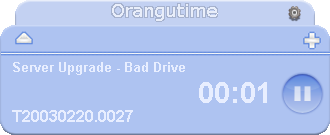
It’s quite simple. The “fat client” is simply an executable that requires no installation. Just download and double click. It will prompt you for your username and password.

2

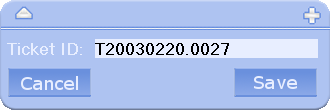
Select an Autotask ticket to load. This can be pulled from the portal, from the notification email, from the dispatch or even the client yelling at you for not working on their request.

1 

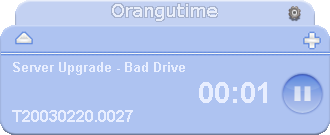
Once the request is in your work queue, just hit the play button and let it count your time while you work.

5

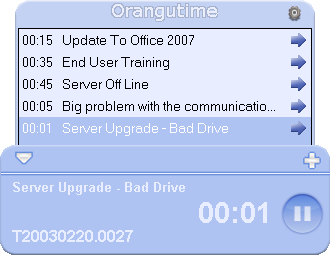
You can work on multiple requests at once, if you click on the arrow to expand the list your active support requests will be there with the current time to be posted to Autotask. Just click the blue arrow to add a note to accompany the update and post it to the Internet.

6

In my humble opinion, this competes with Notepad. I set the guys up with one objective: Make this faster and more efficient than Notepad. If they can click, type or write stuff in notepad faster, we don’t stand a chance.

So, ladies and gentlemen, this is 1.0. We’re obviously going to add a bunch more stuff to this and we’re looking for beta testers – I’ll post details on that in a separate blog post @ ownwebnow.com – but I do want to make it clear that we are not writing a fat client for Autotask. In my opinion, the future of applications is in the cloud and replicating the functionality of Autotask with the technology that should be left in the last decade is not likely to appeal to anyone.

So Mr. Rosenfelt, close ‘nuff? 🙂

I hope you’ve all appreciated a bit of background behind this development, how we came up with it, what the advantage is and how the software companies think. I hope to bring you more of this kind of stuff because as I’ve shared with many of you in person – we are in a partnership here. As much as we try to understand how you work and provide you solutions, you have to understand how we work and how we make money – all with the hope of a win/win goal.

Autotask Live: Extending & blending the platform

ExchangeDefender, Friends, IT Business
10 Comments

If there is anything I’ve learned in my 13 years in this industry, it’s that when you do nice things for people they tend to repay you more than you ever expected. We’ve been fortunate enough to be on the receiving end of that equation for years, which in part is why we’ve done so well – but in the past year we got to give back to our partner community as well as our strategic partners.

Case and point: Autotask. Trying to create an integration point in the IT space is not very easy. A little over a year ago, when we first started designing our Autotask integration points, we anticipated a very painful process and just hoped to have some basic stuff in for the product in time for the Autotask CommunITy live. We asked for a conference call to help us with some initial issues – Autotask and Brian Sherman (who ran the industry alliances at the time) agreed to help us out and we expected the usual type of a meeting – an apathetic developer, a clueless marketing person and a random person stumbling over promises that won’t be kept. What ensued, shocked and surprised us.

Autotask brought in 11 people in that conference call, all eager to help us out.

The first, and only, time we had an issue the CEO called Steve Noel into his office during the call and we had the documentation in the email within the hour.

Finally, and this is the catalyst for what you will see in the next 24 hours from us, every chance Autotask got our integration got promoted. At every event we went to, Autotask promoted us and talked about our integration. And after every one of those presentations/calls, we had a line of new people ready to sign up.

I assure you, hand on the pile of money we spend on marketing, you can’t buy that kind of publicity and endorsement.

The Payback

In 2009 we spend a record amount of time on the road and started a very aggressive marketing campaign.

In 2010, we quadrupled that effort.

So when it came around to pay back Autotask, we did what we’re really good at: We asked our partners what they would like to see in the solution that wasn’t there already. Over the next 24 hours, I will share with you the details of two solutions that our partners asked for.

Email – to – Ticket Gateway

The biggest gripe among Autotask users has been the difficulty of getting emails into the Autotask portal – there are some commercial solutions, there are Outlook plugins, there is even a commercial Exchange plugin.

But we’re in the cloud age, right? Everything should be free, right? Things should just work in the cloud, no purchasing, no downloading, definitely no server plugins, right?

Right. We’re proud to announce the first free, transparent, secure and cloud based email-to-Autotask ticket interface built right into ExchangeDefender (which is free to our partners and Autotask patners). With our solution you can pick an email in your domain to function as a gateway, everything sent to it will create a ticket in the Autotask system, assign it a priority and even a specific queue. The deployment is dead simple:

Just provide ExchangeDefender with the credentials to your Autotask portal. Important: This is the primary competitive advantage over anything else out there: ExchangeDefender is a secure network, with the current SAS 70 – Type II audit and a ton of people managing, developing and monitoring the network around the clock. Your credentials don’t sit on a random leased server in a colo, you can trust the security behind this system.

step2

Next, pick the default email address from your domain to function as the Autotask gateway. Anything sent to this address will create a ticket in your Autotask portal.

step3

Assign the default Queue, default person to assign it to, etc. This is huge because it now isolates Autotask as the sole SLA engine – if it’s not in Autotask it doesn’t get an SLA and it gives your personnel the ability to only have one place to check. No more looking at portal, or waiting for the service manager to assign tickets – this becomes a part of an automated workflow.

step4

Now for the real kicker: Let’s say you have a real PITA client for which every issue is always urgent. We all have clients like this. Well, now you can offer them a real VIP service. Program their email address into the Autotask gateway, assign a queue and bump that priority up to Urgent (or whatever your highest priority happens to be, the gateway will automatically pull down all of your queues, priorities and contacts during setup).

step5

Another way to think about this is as an extension to every unmanaged/unintegrated peripheral and service you want to monitor through Autotask. If it generates an email alert, it now integrates into Autotask. You’re welcome 🙂

step6

Business Strategy

OWN is a channel only company and much like Autotask, the longer we keep you in business and the more efficient we make you, the more money we make. It’s a true partnership.

So this is free. No questions asked.

I hate to channel Billy Mays here, but we’re not going to be shy about saying that we have the most hardcore integration of cloud services into Autotask, bar none. If we can make it easier and more effective for you to use Autotask, you’ll spend more time in our software and more time in Autotask – which will make the value behind each solution jump. So yeah, it’s free and it will save you hundreds or thousands of dollars depending on what 3rd party solution you may have used for this in the past (or the most expensive one: nothing at all) and it’s a true win-win-win.

So Autotask, partners, thank you for working with us and continuing to do business with Own Web Now. It’s a pleasure to be able to make this kind of a contribution back to people that pushed us so hard.

How do I get it

It’s free. It’s in ExchangeDefender. Just login, hover over Configuration button, setup and give it an hour to do it’s initial rollout.

Next up

Stop by our booth, drop your card in (for a chance to win a free iPad) and we’ll bump you ahead in the queue and hook you up for free with the solution we’re launching at Autotask #CommLive tomorrow. (sorry, trying to pace my pimping)

Little bit of a background: I met a partner at xChange (Brian Rosenfelt) who was thinking about switching away from Autotask. Why??? He didn’t like the web app feel, the lag between page loads and refreshes and wanted something that he could just manage – online and offline – and quickly add ticket notes and track time spent on each.

Well Brian, check back here on Tuesday AM 🙂

P.S. This blog post is brought to you at 4:30 AM by my friend, road insomnia. 🙂